Awarding body:
Ascentis
Study time:
600 hours
Study method:
Full online study
£1,499.00
Begin your path to becoming a Paramedic with our fully accredited Access to Higher Education Diploma. This qualification is designed to prepare you for entry into leading Paramedic Science degree programmes across the UK, giving you the academic foundation, confidence, and skills to succeed at university.

Choose your enrolment options
About this Course
Have you dreamed of being the first on the scene? Of helping patients at critical moments and making fast, life-saving decisions? Our Access to Higher Education Diploma in Paramedic Science is built for those who want to take this vital role but don’t yet meet the standard entry requirements for a Paramedic Science degree.
This diploma is specially designed for adult learners returning to education or looking to change careers – it gives you the academic foundation, subject knowledge (such as human biology, emergency care, professional practice), and confidence to progress to degree-level study in Paramedic Science. We offer a flexible, supportive structure that fits around your life and commitments.
With expert tuition, clear guidance, and curriculum aligned to what universities expect, this course opens doors to some of the UK’s top Paramedic Science programmes. Enrol today and start moving toward an impactful, fast-paced career in emergency medical services.
| Study Time: | 600 hours |
| Enrolment length: | 24 months |
| Course Format: | Online |
| Entry Requirements: | You will need to be a UK residency to study with us but can reside outside of the UK while studying. |
Qualification
Our Level 3 Access to Higher Education Diploma in Paramedic Science is a full-year qualification built for people who don’t yet have the formal academic credentials for university but are driven to pursue a career on the frontline of emergency care.
This diploma gives you the essential scientific knowledge and subject-specific grounding that paramedic degree programmes demand. You’ll study key topics such as human biology, physiology, emergency medical response, healthcare communication, and professional practice. Alongside this, you’ll build academic skills -researching and referencing, essay writing, independent learning, critical thinking, and time-management -that will support your success in higher levels of study.
On completing the course, you will have earned 60 credits, with most at Level 3, preparing you to apply for degree programmes in Paramedic Science or Paramedic Practice. You’ll leave the diploma ready to take on the challenges of university learning and move closer to a fast-paced, rewarding career in emergency medical services.
Course Content
Included in this Paramedic Science Access to Higher Education course are the following units:
Unit 1: Biomolecules and Key Biochemical Principles
Biochemistry is fundamental to understanding life at a molecular level, as it explores the structure and function of biological molecules and the key principles governing cellular processes. This unit focuses on the essential biomolecules—carbohydrates, proteins, lipids, and nucleic acids—along with their roles in maintaining life.
Unit 2: Introduction to Cell Biology
Cells are the fundamental units of life, forming the basis of all living organisms. This unit explores the essential principles of cell biology, including the differences between prokaryotic and eukaryotic cells, membrane structure and transport mechanisms, and the processes of cell division.
Unit 3: Planning a Practical Investigation
This unit provides learners with the opportunity to design and plan an independent biological investigation. It develops essential skills in project formulation, planning, and research design, preparing learners for further study or scientific inquiry in applied and academic contexts. Emphasis is placed on ensuring that the investigation is grounded in biological theory, is feasible within given constraints, and adheres to scientific and academic conventions.
Unit 4: Carrying out a Practical Investigation
This unit provides learners with the opportunity to carry out a previously planned scientific investigation and to demonstrate competence in practical scientific skills, data handling, and critical reflection. Building on prior work in investigation planning, this unit focuses on the implementation, analysis, and evaluation stages of the scientific process, preparing learners for further study or work in applied scientific and technical fields.
Unit 5: Anatomy and Physiology of the Human Skeleton and Muscles
The human skeletal and muscular systems form the structural and functional foundation of the body, providing support, movement, and protection for vital organs. This unit explores the intricate relationship between bones, joints, and muscles, examining their structure, classification, and physiological roles in movement and stability.
Unit 6: Aspects of Human Physiology
The human body is a complex and highly organised system composed of multiple organ systems that work together to maintain life. This unit explores the fundamental aspects of human physiology, focusing on the organisation of the body, the functions of key organ systems, and the vital process of homeostasis.
Unit 7: Pathogens, Disease, and Prevention
Infectious diseases have shaped human history, influencing populations, economies, and healthcare advancements. These diseases are caused by pathogens, which include bacteria, viruses, fungi, protozoa, helminths, and prions. Pathogens have evolved diverse mechanisms to invade hosts, evade immune responses, and spread within populations, making them a significant challenge to public health.
Unit 8: Social and Community Welfare Provision
The Social and Community Welfare Provision unit explores the social issues that influence health and well-being and examines how welfare systems have evolved to meet the needs of individuals and communities. It develops learners’ understanding of the historical and contemporary factors that shape service provision and highlights the importance of values and ethics in professional practice.
Unit 9: Equal Opportunity and Diversity
The Equal Opportunity and Diversity unit introduces learners to the key concepts, theories, and practices related to promoting equality and valuing diversity in contemporary society. It equips learners with the knowledge and analytical skills required to understand and address different forms of prejudice, stereotyping, and oppression while fostering awareness of the principles underpinning inclusive and equitable practice. The unit supports learners in recognising how discrimination can manifest at individual, cultural, and institutional levels, and how to apply legislative and organisational frameworks that support equality and diversity.
Unit 10: Ethical Issues in Professional Practice
The Ethical Issues in Professional Practice unit introduces learners to the fundamental ethical principles, legal frameworks, and professional responsibilities that underpin decision-making in various care and service contexts. It provides the tools to understand ethical theories, evaluate the relationship between law and ethics, and apply moral reasoning in realistic professional situations.
Unit 11: Health Promotion
The Health Promotion unit equips learners with the knowledge and critical understanding needed to explore the purpose, delivery, and impact of health promotion in a range of individual and societal contexts. It introduces key concepts and models of health promotion and enables learners to assess how these influence public health strategies and personal well-being.
Unit 12: Effective Communication in Health and Social Care
This unit explores the foundational role of communication in promoting high-quality care and building positive relationships with service users. It equips learners with the knowledge and understanding necessary to identify effective communication approaches, assess individual communication needs, and recognise and overcome barriers to communication.
Unit 13: Perspectives of Health
The Perspectives of Health unit enables learners to explore how health is understood, influenced, and experienced across different social, cultural, and personal contexts. It develops the ability to analyse how definitions and models of health shape both individual understanding and the delivery of care, and how wider social inequalities affect health outcomes.
Unit 14: Academic Writing Skills
The Academic Writing Skills unit equips learners with the tools required to analyse academic questions, produce well-structured written responses, and apply appropriate academic conventions. It focuses on developing the ability to interpret the meaning and implications of specific questions, identify key concepts and terminology, plan responses, and present them clearly and logically using appropriate academic formats and referencing practices.
Unit 15: Improving Your Own Learning
The Improving Your Own Learning unit supports learners in developing the awareness, strategies, and personal management skills necessary to succeed in further or higher education. It encourages self-reflection, goal-setting, and the application of study skills across a range of academic tasks, promoting autonomy and lifelong learning habits.
Unit 16: Critical Thinking
Critical Thinking supports learners in developing the analytical skills needed for successful progression in higher education. It introduces key methods for distinguishing fact from opinion, recognising bias, and applying reasoned judgement when engaging with academic texts. Learners explore how to evaluate the credibility of evidence, compare different viewpoints, and use both deductive and inductive reasoning to reach justified conclusions.
Unit 17: Academic Research Skills
The Academic Research Skills unit introduces learners to the foundational principles, techniques, and ethical considerations that underpin effective academic research. It supports the development of essential skills for planning, conducting, and evaluating research within a range of subject areas, preparing learners for success in higher education and professional inquiry.
Online study and instant enrolment
All of our students are given access to our Online Campus through their own personal login and password. As soon as you complete your enrolment, you would have immediate access to your account which allows you to make a start working through the lessons. Tackle your assignments as your own pace and contact your tutor to access any help and support you need. The course itself is set out in a very simple layout, making it easy to work through the topics and complete your assessments.
Our Online Campus includes:
- Instant enrolment – access everything on your course from the moment you enrol.
- Personal account logins – login any time, 24/7.
- Full support throughout – message your tutor, use our online chat or give us a call.
- Online assignment submissions – upload work online from the comfort of home.
- Self-led learning – study at your own pace so you can pass much faster.
- Safe e-portfolio system – store all of your work in your account.
- Progression tracking – easily see what assignments you have left to complete.
- Details help centre – get instructions and guidance every step of the way.
- Unlimited attempts – submit as many attempts at your assignments as you need.
Unlimited assessment submissions
All of the assessments for this course are completed through our Online Campus. You can attempt each one as many times as needed to ensure you pass. After every attempt, your tutor will provide detailed feedback and tips on how you can improve going forward. Quickly see your progress during your studies by checking your progress bar and seeing the remaining assessments you need to complete.
Get full tutor support
Throughout your enrolment with the Online Learning College, you can access support at any time you need. All students are assigned a personal tutor who will mark all of your work and provide detailed feedback after every submission. Your tutor will be an industry expert with a full knowledge of the course content and will be able to help you at any point along your learning journey. One of the best tools at your disposal is your tutor – you can ask as many questions of them as you wish to and they will be happy to help at any time.
We also have a brilliant support team on hand and available through email, online chat and over the phone. This team is there to help with any questions which are more generic, such as providing support in submitting work through your account or getting your certificate when you have completed your course. We pride ourselves on ensuring the support you receive is the best in the business – help and guidance is fast and detailed every time you contact a member of the team.
Assessments
All assessments on this Diploma are done through Tutor Marked Assignments (TMAs) and there are no exams. Assignments can be completed as soon as you are ready and submitted to your tutor. Once each of these has been signed off, the Diploma is complete.
Assignments on the course include written coursework, research tasks as well as a project which requires planning and completion. Each assignment has a limited number of attempts when you are completing work and full feedback is given by your tutor.
Enrolment Length
All of our courses are allocated plenty of time for students to complete their studies and all materials are self-led so that you can complete the course at your own pace, but you have access to the course on the Campus for 24 months from your enrollment date. Should you require additional time on one of our courses you can extend your enrolment by 30 days for an additional fee of £60. As well as this we operate a 14 day money back guarantee on every one of our qualifications- that’s how confident we are of how you will love studying with us!
Access to Higher Education Diploma
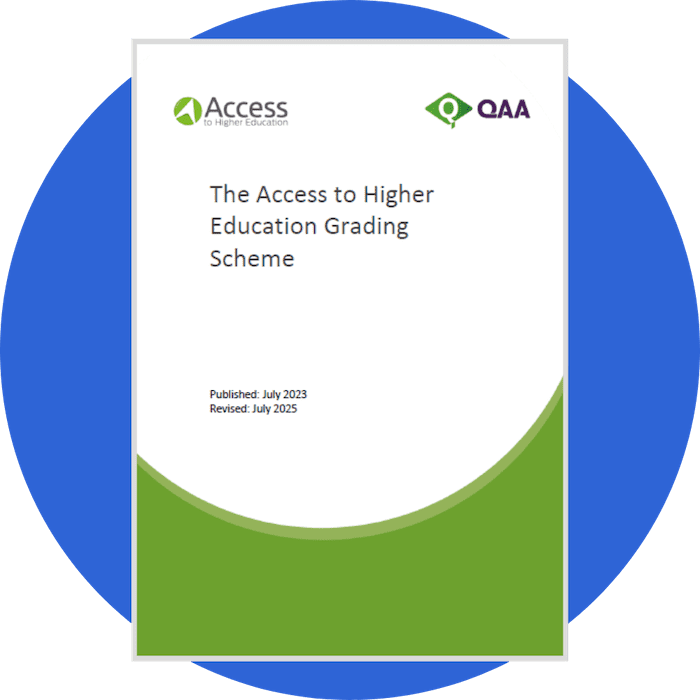
At the end of this course, successful learners will have the option to receive an Access to Higher Education Diploma, awarded by an authorised Access Validating Agency (AVA), along with a Learner Achievement Summary confirming the units completed as part of the programme.
Access to Higher Education Diploma
All Certification Costs Included
Frequently Asked Questions
Learn more about this course and others that we offer. If you still have any questions, simply contact our course advisors on 0800 772 0887 or email info@ol-college.com.
What is included in this Paramedic Science Access to Higher Education course?
This Access to Higher Education Diploma is a level 3 qualification designed to build the knowledge and academic skills you need to progress to university-level study. It includes a combination of subject-specific units and broader study skills, so you’re not only learning relevant content but also how to work at the standard expected in higher education.
On a radiography-focused pathway, the subject content typically covers areas that support applications to radiography and wider allied health degrees, such as core human biology and health-related science, healthcare contexts, and professional themes that help you understand how services operate and what is expected in patient-facing roles. Alongside this, you’ll also complete units aimed at developing your academic confidence, including researching information properly, structuring written work, using referencing, and communicating clearly in an academic style.
You complete the Diploma by working through your online learning materials and submitting assignments for each unit. As you progress, you build up credits across the Diploma and receive feedback that helps you strengthen your work and improve your results.
Is this Diploma regulated?
Yes. Access to Higher Education Diplomas are regulated qualifications and are widely recognised across the UK as a route into higher education for adult learners. This means the Diploma follows a defined structure and quality framework, rather than being an informal certificate.
Because it’s regulated, it must meet specific standards around what is taught, how learning outcomes are assessed, and how grades are awarded. It also means the qualification is designed to be understood and trusted by universities, particularly for applicants who have been out of education or who didn’t take a traditional level 3 route such as A-levels.
How do Access to HE Diplomas work?
Access to HE Diplomas are built from a set of units. Each unit has learning outcomes and assessment criteria, and you achieve credits by successfully meeting those requirements through your assignments. Over the course, you work through the learning content online, complete the assessments, and receive tutor feedback.
Most Access to HE Diplomas include a mixture of graded and ungraded credits. The graded units are normally marked as Pass, Merit, or Distinction. Your final Diploma is based on the full set of credits you achieve, and your overall grade profile is made up of the results across the graded units rather than a single final exam.
Because the Diploma is unit-based, you can focus on one section at a time. This structure helps many adult learners stay organised and build confidence, especially if it’s been a while since they last studied. It also means you can steadily track your progress as you move through the programme.
Can I get into University with this course?
In many cases, yes. Access to HE Diplomas are designed specifically to support university entry, and they are a common route for adult learners applying to healthcare and allied health degrees. The Diploma demonstrates that you can work at level 3 and that you have the academic skills needed to cope with degree-level study.
That said, universities set their own entry requirements, and radiography degrees can be competitive. Some universities will specify the type of Access to HE Diploma they accept (for example, a health/science-based Diploma), the grade profile they want, and the subjects they expect you to have covered. They may also require GCSE English and maths (or equivalent), and sometimes ask for a science GCSE as well.
It’s also worth knowing that radiography degrees often have additional requirements beyond academics. These can include an interview process, evidence of suitability for clinical practice, health checks, and background checks such as a DBS. Your Access course helps with academic preparation, but the university admissions process may still involve these extra steps.
A good approach is to shortlist the universities you’re interested in and check their radiography entry requirements early, so you can be confident your Diploma content and grade targets align with what they’re asking for.
Can I speak to someone before I enrol?
Of course! We have course advisors and a customer service team in the office Monday to Friday 9am until 5pm who will be happy to help and answer any questions that you may have. You can call us on 0800 772 0887, email us at info@ol-college.com or we even have a live chat facility.
How long do I have to study?
The enrolment term is 2 years, however, as long as you complete all of the written assignments and practical tasks (if applicable) then you can complete the course sooner if you wish. If you need any additional time after the 12 months then you can also extend which costs £60 per month and you can do this as many times as needed.
What are the payment options?
There are various payment options for this Paramedic Science Access to Higher Education. The first option will be for you to purchase the course and pay in full upon enrolment. The second option is the pay monthly option, this is completely interest free and splits the cost into 12 monthly payments. Klarna is also available on checkout to enable you to split your payment into 3. Finally, we can send an invoice with 30 days payment terms if your employer will be funding the cost of the course – if you would like this option, then please ask your employer to get in contact with us so we can provide them with the details we will need.
Do you offer any funding for the course?
Unfortunately we don’t offer any free or funded courses but you can split the cost into 12 monthly payments which is completely interest free.
Do I need to buy anything else for this Paramedic Science Access to Higher Education course?
Everything that you will need will be provided to you when you enrol, you will also need to complete some of your own research too. Buying text books and other resources can become costly so we don’t ask you to or recommend buying anything, there is lots of free and very useful information online!
How do I see my course material/resources?
Everything that you will need for your course will be accessible on our online campus. This includes all of your lessons, assignments and tutor support through our messaging system. You will need to reference other sources in your assignments but the internet can be used for this and there is no need to purchase any textbooks for our Access to HE Diplomas.
How do I log in and access my course?
Once you have enrolled then you have access to the campus right away to get started on your course. You can log in by going to our website and clicking ‘Log in’ at the top right hand side of the page. Your username is the email address that you used to enrol and your password is the one you created at the checkout when enrolling.
When will I receive my certificate?
Once you have completed and passed all units and your course is paid in full (either paid in full upon enrolment or if paying monthly then the remaining balance paid or monthly payments complete), then we can request your certificate from the Awarding Body. Certificate’s take 6-12 weeks to arrive with us and once we receive it we will then contact you to confirm the address to post it to. Certificate’s are sent via Royal Mail 1st Class, Tracked & Signed delivery.
What happens if I fail an assignment?
If you fail an assignment, then please do not worry! You can resubmit your assignment as many times as needed until you pass. Each time you submit an assignment then your tutor will mark it and provide feedback, you can then make the amendments and resubmit and have the new version marked again.
How long does it take to mark my work?
We have a marking timescale of 5 working days from the submission, your tutor will mark your work and provide feedback with if you need to make any amendments to enable you to pass. Please note, we do ask that learners don’t upload more than one submission at a time as this will delay the marking not just for yourself but for other learners too.
Do I have to attend or view any live/virtual lessons?
You don’t, everything is in written, text, image and diagram format. You will have access to the campus 24/7 to be able to log in and complete your work. You won’t need to view any videos or audio lessons.
What device can I/shall I use?
As you will have assignments to write and type up for submission then we would recommend using a computer or laptop for this as you will need to use a software such as Microsoft Word or Google Docs to type these. You may also be able to use an iPad/tablet for this. You can use a smartphone if you wish but you may find it difficult and it would probably be easier on a larger screen/device.
How do I complete my assignments?
Once you have enrolled and accessed the campus you will see your assignment tasks and criteria of what needs to be covered in each assignment.
Our latest reviews
Fully supported by an online tutor
Our Access to HE Diplomas come with full tuition from an expert tutor. Your tutor can be contacted through our messaging system, and the same person will provide feedback on your assignments. We also have a dedicated admin team on hand to help over the phone, through live chat, and by email.
1 working day for replies to messages
5 working days for feedback on assignment
Our turnaround times are the best in the industry!

Our speedy support promise
When you study with us, we ensure a speedy service. That's why our current timeframes for marking and support are the best in the business.