
In this post
In any home, farm or rescue centre, the line between a close call and a serious emergency can be thin. Quick, calm action often makes a significant difference.
Whether it’s a much-loved pet, working livestock or wildlife in rehabilitation, when an animal is injured or suddenly unwell, those first minutes matter. Prompt first-aid can ease the animal’s pain, prevent the situation from worsening and improve their chances of a good recovery.
Every second counts. Because animals can’t verbalise how they feel, small changes in behaviour – rapid breathing, glazed eyes, reluctance to move, an odd stance – may be the only clues that something is seriously wrong. Quick action can stop a simple wound from becoming infected, slow or prevent shock or buy vital time while a vet is on their way. A cat choking on a toy, a dog with heatstroke or a horse with a deep cut all rely on those first minutes of calm, effective response.
First aid is a key aspect of good animal care. Under the Animal Welfare Act 2006, owners and carers have a duty to protect animals from unnecessary suffering. That means it’s your responsibility to know what to do in an emergency.
For wildlife volunteers, basic first aid may be the only support an injured animal gets before reaching a rehabilitation centre. In all these situations, confident first steps can ease pain, improve outcomes and reflect the trust and responsibility we hold towards the animals in our care.
This guide introduces the essentials: what to keep in a first aid kit, the warning signs that need urgent attention and the core steps for handling injuries, bleeding and collapse. You will also learn how to assess risk, when to attempt CPR and when to seek professional veterinary help.
Animal first aid – legal and ethical considerations in the UK
Under the Animal Welfare Act 2006, anyone responsible for an animal must take “reasonable steps” to meet its welfare needs. This includes protecting it from pain, injury, disease and unnecessary suffering. Failing to provide basic care can be an offence.
As long as you act in good faith and within the limits of your ability, you are permitted to give first aid until a vet can take over. In emergencies, the law recognises that non-veterinary people may need to act quickly.
Guidance from the Royal College of Veterinary Surgeons (RCVS) supports this approach. Laypeople can carry out first aid “to preserve life or prevent suffering”, but should not attempt anything beyond their knowledge or skill. First aid is not a replacement for professional treatment.
Some actions are not permitted. Giving prescription-only medicines, including antibiotics, sedatives or human painkillers, is illegal unless a vet has authorised their use under the Veterinary Medicines Regulations 2013. If you give an animal restricted medicines, you may face prosecution. You can also worsen the animal’s condition.
Ethically, first aid should also minimise fear and distress. A nervous dog may need a temporary muzzle for safe handling, but it must allow panting. Injured wildlife should be touched as little as possible to avoid shock or imprinting. These considerations underline the purpose of first aid: to stabilise the animal safely and support its welfare until veterinary care is reached.
What to put in an animal first aid kit
Although the exact contents should vary by species (for instance, horses need different supplies from cats, dogs or small mammals), several first aid essentials are useful for most animals.
Core medical supplies:
- Sterile gauze in different sizes
- Non-stick pads
- Self-adhesive bandage wraps
- Veterinary tape
- Blunt-ended scissors for trimming fur or cutting dressings
- Tweezers for removing thorns or splinters
- Disposable gloves
- Antiseptic wipes or chlorhexidine spray for gentle wound cleaning
Monitoring tools:
- Digital thermometer (a flexible one for cats is ideal)
- Haemostatic powder or granules for bleeding control
- Torch for checking pupils and mucous membranes
- Basic stethoscope for heart and lung checks
Handling and restraint equipment:
- Slip leads or soft ropes
- Gentle, well-fitted dog muzzle
- Elastic tension bandages for supporting injured limbs
- Rigid board, folded blanket or similar for moving larger or immobile animals
Helpful extras:
- Telescopic mirror for inspecting equine hooves or hard-to-see areas
- Small notepad and waterproof pen for recording times, symptoms and first aid steps
Once assembled, maintain the kit by checking it monthly. Replace expired antiseptics and make sure bandages haven’t lost elasticity. Keep the kit in a cool, dry, clearly labelled place so you can reach it quickly when needed.
Assessing the situation – safety for you and the animal
Before stepping in, pause and survey the scene. Acting too quickly can lead to further harm, especially if the animal is frightened or the environment is unsafe.
Protect yourself first. For example, if the injured animal is beside a road, check for traffic. Separate other animals to prevent confusion and put on disposable gloves to reduce infection risks (such as leptospirosis and ringworm). When approaching large animals like horses or cattle, avoid blind spots directly in front or behind. Come in from the side so they can see you and keep your movements calm and steady.
Once the area is safe, check the animal’s consciousness and breathing. A collapsed animal lying on its back may not be able to breathe properly, so gently turn it onto its side. Observe its respiratory rate – dogs typically take 10–30 breaths per minute and cats 20–30. Laboured breathing, wheezing or open-mouthed panting in a cat suggest urgent respiratory distress. If you have access to oxygen, such as a pet mask connected to a cylinder in a professional setting, use it immediately.
Assess circulation next. Look at gum colour and test capillary refill time by pressing the gums until they blanch, then watching how quickly the pink returns. Two seconds or less is ideal. Pale, blue or very bright red gums may signal shock or respiratory compromise. Check the animal’s pulse: under the jaw in cats and small dogs, or at the medial artery near the fetlock in horses. A very weak or rapid pulse indicates an emergency.
Finish with a careful head-to-tail check for visible injuries. Look for bleeding, swelling, deformities or fluid from the nose, mouth or eyes. Be cautious with distressed or defensive animals. If you suspect a spinal injury, keep the animal as still as possible. Use rolled towels along the neck and back to create improvised supports until a vet arrives.
Handling wounds – cleaning, dressing and bandaging
Once you locate a wound, your first aim is to prevent contamination and control bleeding.
Keep the animal safe and as still as possible. Use a muzzle or slip lead for dogs, a towel wrap for cats or gentle handling for larger species. Clip fur around the wound with blunt-tipped scissors, taking care not to catch the animal’s skin.
Flush the area with lukewarm sterile saline or cooled boiled water to remove dirt and debris. Avoid hydrogen peroxide or alcohol as these damage healthy tissue. Pat the area dry with sterile gauze.
Place a non-stick dressing directly over the wound. Small, shallow injuries may only need an adhesive pad. Deeper cuts require an absorbent pad followed by a cohesive bandage wrap. The bandage must be secure but not tight – check you can slide a finger under the edge.
After bandaging, check the area below the wrap for swelling, coolness or discolouration. Any one of these signs means the bandage is too tight and needs adjusting.
Lower-limb wounds in horses are especially tricky because their legs have limited soft tissue. Alginate dressings mould well to awkward areas and support moist healing. Add a padded layer and a tubular bandage for stability. Change dressings daily and monitor for signs of infection such as heat, smell or discharge.
Abscesses in rabbits and small pets respond well to warm, moist compresses for 10–15 minutes several times a day. Let the abscess drain naturally before cleaning and applying a light dressing. Forcing drainage risks pushing the infection deeper.
Managing bleeding and shock
Severe bleeding is a serious health emergency and needs immediate action.
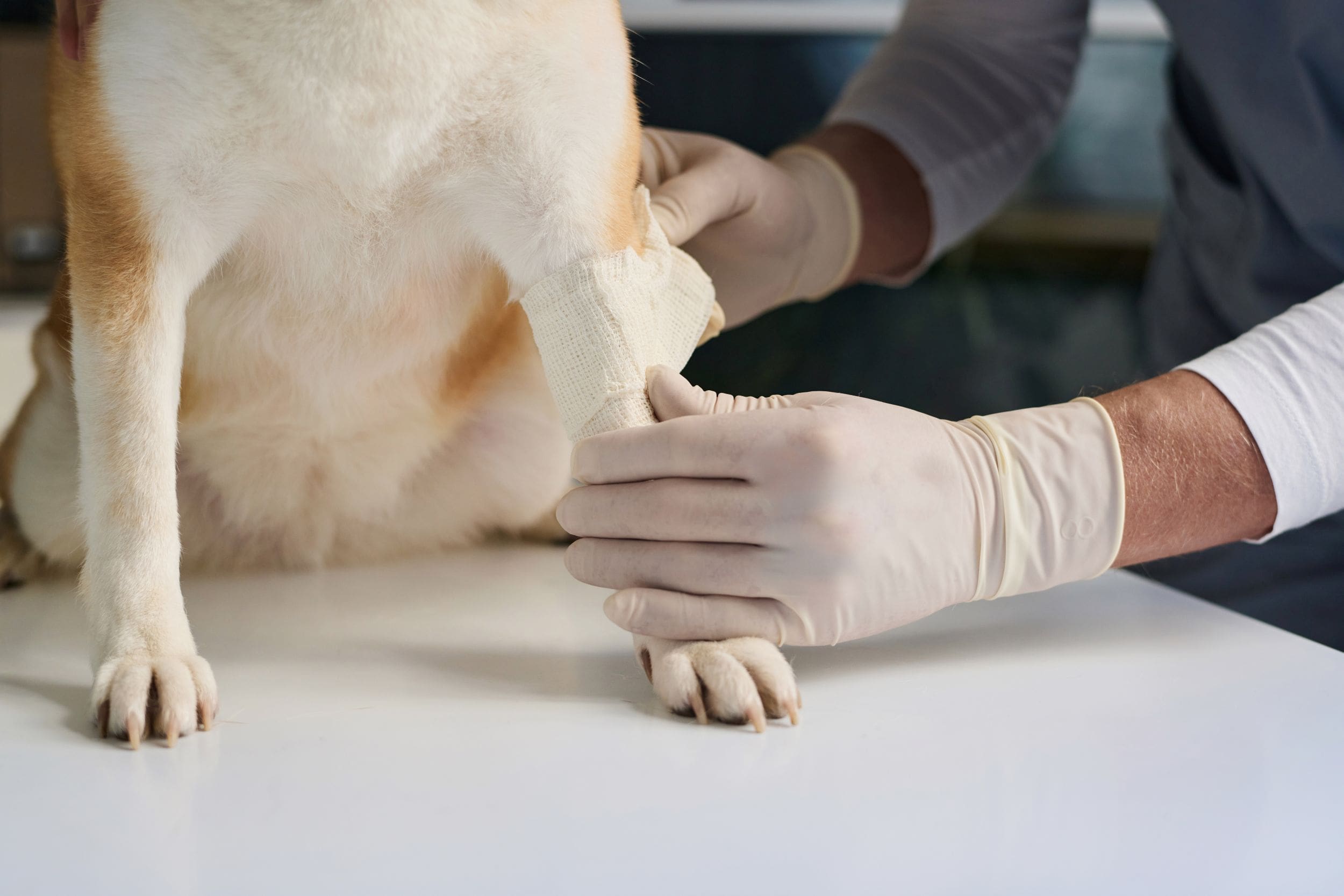
Apply direct pressure with sterile gauze or a clean cloth. Hold it in place for several minutes without lifting, as this disrupts clotting. If the wound continues to bleed, apply a pressure bandage. Place gauze over the site, then wrap a stretchy bandage firmly around the area.
For limb wounds where a tourniquet is possible – such as on a dog’s leg – place a broad strap above the injury and record the time. Only use a tourniquet as a last resort, as it can damage tissue.
Shock often follows major blood loss or trauma. Look for pale gums, a rapid, weak pulse, cool extremities and changes in alertness. Lay the animal on its side, raise the hind end slightly and keep the body warm without covering the face.
Don’t give the animal food or water. Only offer oral glucose gel if you strongly suspect hypoglycaemia (low blood sugar), such as in newborn kittens or diabetic dogs.
Maintaining warmth is crucial. Use thick blankets or wrapped hot-water bottles for large animals. For smaller animals, place a warm heat pack under a towel.
Monitor vital signs every five minutes. Use oxygen if it’s available – via a mask, cage or tubing.
Transport the animal to a vet urgently and share details of blood loss, what you have done so far and any changes you have observed on the way.
CPR and rescue breathing for small and large animals
Cardiopulmonary resuscitation in animals follows similar principles to human CPR but needs species-specific adjustments.
Start only when the animal is unresponsive, not breathing and has no detectable heartbeat. Roll the animal onto its right side – this gives better access to the heart in most domestic species.
For small dogs and cats, locate the heart between the elbow and sternum. Place one hand over the other and compress the chest by one-third to one-half of its width at a rate of 80–120 compressions per minute. After every 30 compressions, deliver two rescue breaths. Extend the head, close the mouth and seal your lips over the nose (or both mouth and nose in brachycephalic breeds). Exhale steadily until the chest rises. Avoid over-inflation – use gentle breaths, just enough to make the chest rise slightly.
For medium to large dogs, compress over the widest part of the chest using both hands. Brachycephalic breeds often need mouth-to-nose breathing because they have shorter snouts.
For horses, CPR is limited by chest wall thickness. You may attempt intercostal compressions or use intrinsic cardiac massage techniques taught in veterinary trauma courses. Rescue breathing in equines involves holding the nose in a bag or mask to channel oxygen into the lungs.
Maintain a cycle of 30 compressions to two breaths until the animal shows signs of spontaneous breathing – such as coughing or head movement – or until a veterinary team takes over.
Because CPR is physically demanding, you might swap compression duties every two minutes with another rescuer to reduce fatigue and keep cycles consistent.
Watch out for obstructions. If you suspect airway blockage from a foreign body, attempt a cautious finger sweep only if you can see the object, to avoid pushing it deeper.
Heatstroke
Temperature extremes pose real risks to animal health.
Heatstroke often affects dogs left in hot cars, working horses in full tack or brachycephalic breeds that struggle to pant enough to reduce their body temperature. Early signs include excessive panting, drooling, agitation and bright red gums. As core temperature rises beyond 41 °C, stumbling, seizures, collapse and early organ dysfunction can follow.
Immediate cooling is vital but must stay controlled. Move the animal to shade or an air-conditioned space. Apply cool (not ice-cold) water to the head, neck and groin, then fan to support evaporation. Check the animal’s rectal temperature every two minutes. When it reaches about 39 °C, you can stop active cooling to prevent hypothermia. Offer small sips of cool water – but only if the animal is conscious and able to swallow safely.
Hypothermia
Hypothermia is common in small mammals and juvenile birds exposed to damp or draughty conditions. Signs include shivering, stiff limbs, sluggishness and pale mucous membranes.
Create gentle warmth with blankets, low-setting heat pads or warm water bottles wrapped in towels.
Place the animal in a well-ventilated carrier to hold heat and check its temperature every five minutes. Avoid rapid rewarming, as sudden vessel dilation can cause a shock-like response. Once core temperature reaches 37 °C, veterinary care remains essential to assess for underlying issues and stabilise electrolyte levels.
Poisoning and toxin exposure – immediate steps
Some animals, especially young pets, like to eat whatever they can access – so it’s not uncommon for them to ingest harmful substances. Common risks include human medications, household cleaners, slug pellets, lilies (toxic to cats) and xylitol-sweetened foods (toxic to dogs).
Your first priority is to identify the toxin. If you see the ingestion, note the substance, the approximate amount and the time. Contact the Animal PoisonLine (24/7) on 01202 509000 or your local veterinary practice. Keep the packaging or plant samples nearby, as this information can help the vet team know what they are dealing with.
Do not induce vomiting in animals prone to aspiration, such as brachycephalic breeds, rabbits or rodents, unless a vet advises it. If instructed, give 3% hydrogen peroxide orally at 1 ml per kg body weight and repeat once after 15 minutes if needed. Never use salt or syrup of ipecac, as they can disturb electrolytes.
If the animal ingested a corrosive substance, such as bleach or acids, do not induce vomiting. Rinse the mouth gently with water and take the animal straight to the vet.
On the way, monitor vital signs and keep the animal warm. If it’s panting heavily, place a damp cloth over the head. Watch for tremors, seizures or abnormal heart rhythms, as these may help the vet select an appropriate antidote. Time matters: many toxins act quickly, so early treatment can save a life.
Fractures and sprains – immobilisation techniques
An animal may have a fracture or severe sprain if you notice lameness or a reluctance to bear weight. You might even see a visible deformity.
For suspected limb fractures, external support reduces pain and prevents further injury during transport. Use a rigid board, firm blanket roll or commercial splint. Pad the limb well with towels or soft bandages before applying the support.
For forelimb injuries in dogs and cats, a tongue depressor or lightweight dowel, secured with a self-adhesive (cohesive) bandage, is usually enough. For hindlimbs, use two splints – one medial and one lateral – for better stability. Always immobilise the joints above and below the suspected fracture.
Sprains, caused by overstretched ligaments, need a softer approach. Apply a tubular bandage or cohesive wrap to compress and support the joint, checking that circulation stays normal. Use cold compresses for the first 24 hours to limit swelling, then gentle heat to improve blood flow. Keep movement restricted by confining the animal to a small area and discouraging running or jumping.
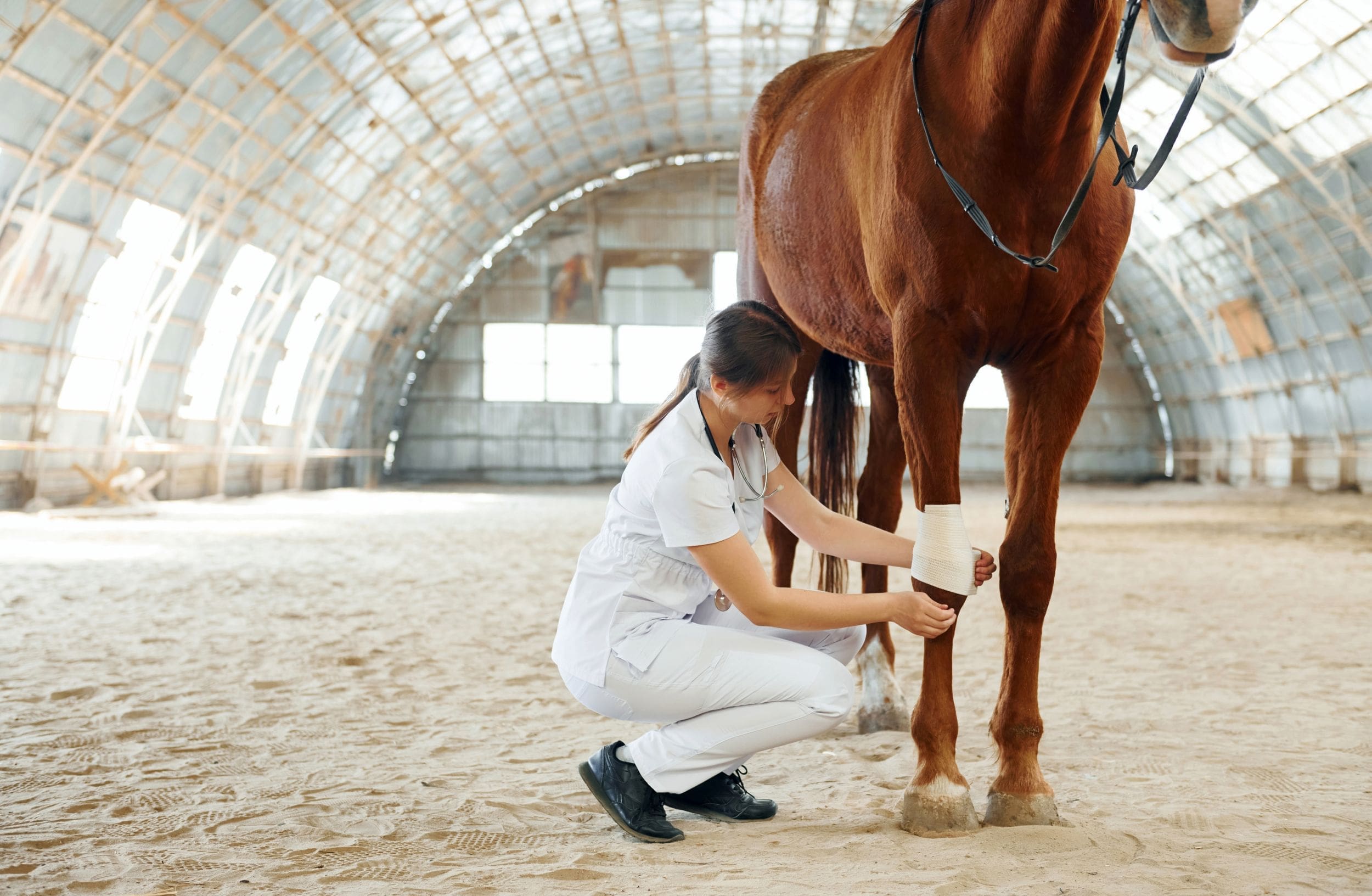
In large animals, especially horses, stable bandaging must be precise. Clean the limb, apply a cotton bandage from the fetlock to the knee, and place a stable bandage over a pillow wrap. Smooth out any wrinkles to avoid pressure sores. Transport on a low-angle ramp to limit jostling, and keep sedation under veterinary guidance to prevent panic that could worsen the injury.
When to call the vet
First aid can help in the moment, but it never replaces veterinary care. Seek immediate help if you notice any of the following:
- Uncontrolled bleeding despite pressure bandages, or blood soaking through dressings within minutes
- Signs of shock, such as pale or blue gums, rapid shallow breathing or collapse
- Any trauma involving the head, neck or spine, including falls from height or kicks from other animals
- Loss of consciousness or no detectable heartbeat after your initial CPR attempts.
- Severe breathing difficulty, including open-mouth breathing in cats, noisy inhalation or flared nostrils
- Suspected toxin ingestion when you have no clear guidance on safe home measures
- Fractures with exposed bone, severe swelling or an inability to bear weight even after immobilisation
- High fever that does not improve with cooling, or hypothermia that persists despite controlled warming
- Sudden behavioural changes, such as confusion, seizures, severe agitation, or uncontrolled vomiting and diarrhoea that cause fast dehydration
Even without these signs, any wound deeper than a few millimetres, lameness that lasts longer than 24 hours or illness that continues for longer than a day should be seen by a vet. When unsure, ask for professional advice. Early assessment is often simpler, safer and less costly than waiting, which could cause the animal’s condition to worsen.