

In this post
To create a safe, nurturing nursery environment, you’ll need a clear, structured approach to health and safety that shapes everyday decisions – even those that seem small.
This checklist brings together the legal duties, routines and practical steps that help nurseries meet UK health and safety standards. It covers everything from compliance and record-keeping to equipment checks, cleaning routines and emergency planning.
Legal duties, frameworks and responsibilities
Nurseries work within clear legal expectations that shape daily practice. These duties come from the Early Years Foundation Stage (EYFS) statutory framework and general health and safety law. Both influence how settings manage their spaces and protect the people who use them.
Ofsted will check how well your environment, daily practice and policies meet the EYFS welfare requirements. At the same time, the Health and Safety at Work etc. Act 1974 requires nursery providers to protect the health, safety and well-being of staff, children and families.
Several pieces of legislation sit behind these responsibilities:
- EYFS statutory framework – outlines welfare requirements such as ratios, safeguarding and the suitability of premises.
- Health and Safety at Work etc. Act 1974 – requires employers to assess risks, provide training and maintain safe working conditions.
- Management of Health and Safety at Work Regulations 1999 – mandate documented risk assessments and the appointment of competent people to oversee safety measures.
- RIDDOR 2013 – requires nurseries to report serious injuries, certain diseases and dangerous occurrences to the Health and Safety Executive.
Everyone has a role to play. The nursery manager holds overall responsibility for compliance and ensures that policies stay up to date and understood. A designated health and safety coordinator usually oversees daily checks – such as fire-alarm testing and equipment cleaning – and may liaise with local authority advisers when needed.
Apprentices, room leaders and relief workers all contribute to health and safety by following the correct procedures. They are expected to spot hazards and report concerns as soon as they arise. Encouraging an open “see something, say something” approach helps avoid a scenario where team members are waiting for direction from senior staff instead of acting.
Documentation and record-keeping
Clear, consistent records show compliance and support ongoing improvements. They act as evidence for Ofsted and give staff a solid base for reflection, reviews and steady safety improvements.
Keep the following records as a minimum:
- Risk assessments – dated checks for indoor areas, outdoor spaces and specific activities, plus action plans showing how risks are reduced and reviewed at least once a year.
- Staff files – evidence of training, induction checklists, photos, qualifications and enhanced DBS disclosures (all must be stored securely under GDPR).
- Maintenance logs – notes of repairs, PAT tests, playground inspections and any work carried out by contractors.
- Incident and accident reports – details of date, time, symptoms, treatment, parental contact and follow-up actions, with termly reviews to spot patterns and prevent repeat issues.
Conducting risk assessments for indoor, outdoor and trip hazards
A risk assessment will only work when it’s practical and shared across the team. Staff should help identify hazards, judge how likely and severe they are and agree on suitable controls. The risk assessment should always be evolving, with updates whenever you add new equipment, change room layouts or adjust routines. Day-to-day, staff can make quick, on-the-spot checks when circumstances shift (for instance, when rain makes outdoor paths slippery).
A good risk assessment should:
- Identify hazards – anything that could cause harm, from loose flooring to unsafe equipment.
- Judge the level of risk – how likely the harm is and how severe it could be.
- Decide practical controls – simple measures that remove or reduce the risk, such as supervision, layout changes or equipment checks.
- Record what you’ve agreed – so everyone knows the plan and can follow it.
- Review regularly – updating the assessment whenever routines, equipment or spaces change.
These principles come to life in everyday practice through simple, routine checks across indoor spaces, outdoor areas and busy walkways:
Indoor safety checks:
- Map each room and corridor so staff can spot risks early.
- Fit electrical sockets with child-resistant covers and arrange regular circuit inspections.
- Secure tall furniture to the wall and check fixings monthly; repair loose screws or splintered edges straight away.
- Install window restrictors or guards on any windows above child height.
- Add finger-guard strips to doors to prevent crushing injuries.
- Use non-slip flooring in spill-prone areas such as craft spaces and snack tables.
- Clean up spills as soon as they happen rather than leaving them for later.
Outdoor safety checks:
- Keep loose-fill surfacing (e.g., sand or bark) at the correct depth — usually 200–300 mm under climbing equipment.
- Use clear edging between hard-surface zones to reduce trips.
- Check boundary fences for gaps, rot or protruding nails
- Arrange quarterly inspections of equipment and surfacing in line with standards such as BS EN 1176.
- Remove thorny or poisonous plants and keep hedges trimmed to maintain good sight-lines.
Common trip hazards and how to prevent them:
- Store toys, books and loose resources away from busy routes.
- Run cables behind skirting boards or through trunking rather than across walkways.
- Make sure rugs and mats lie flat with secure, non-slip backing or tape.
- Mark any small changes in floor level clearly, including raised carpet thresholds.
Creating a safe environment
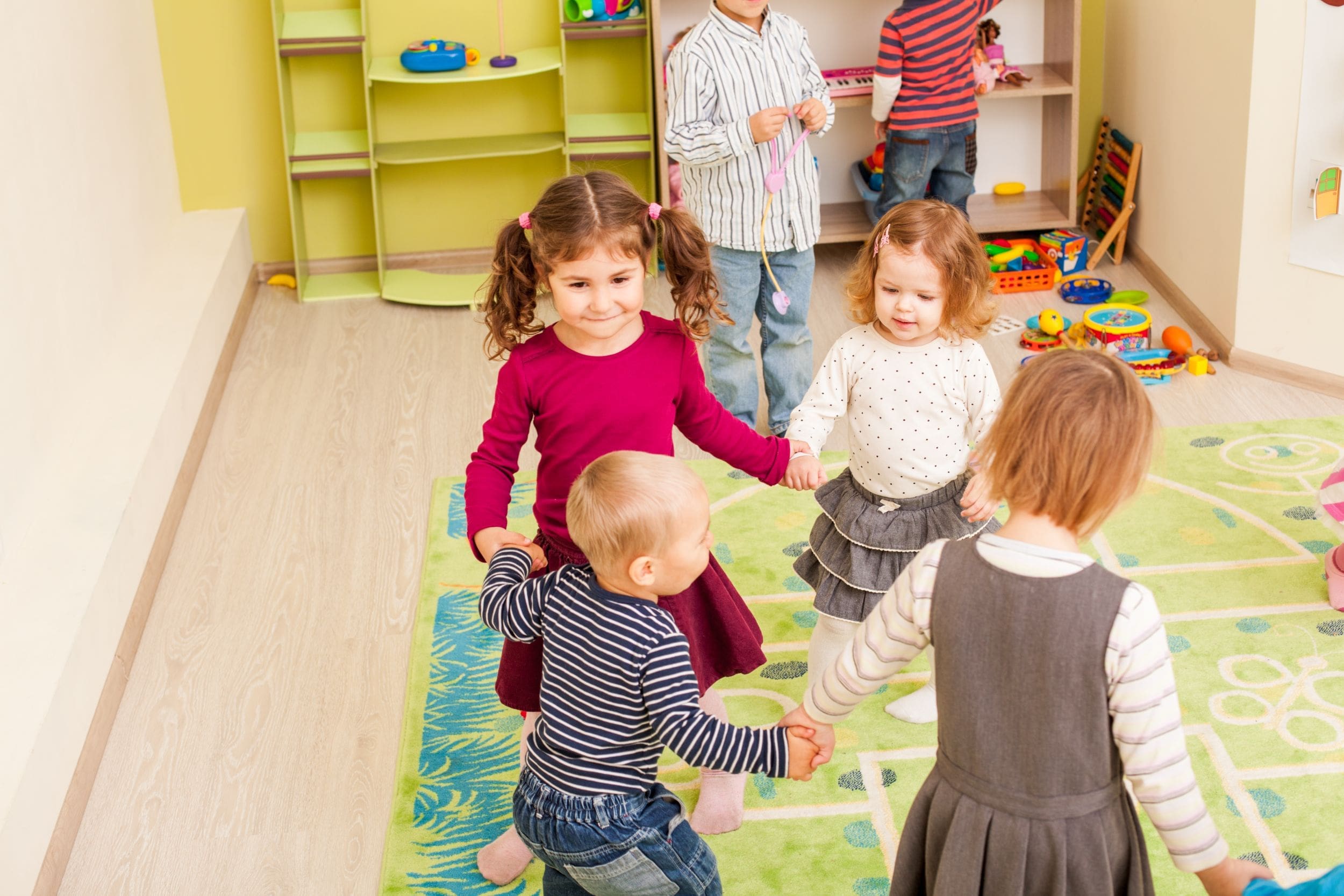
A thoughtfully designed environment lets children explore and develop in a safe, supported way. Small choices around layout, furniture and equipment make daily routines less risky and easier to manage.
Space planning
EYFS space requirements set minimum areas – 2.3 m² per child under two and 2.5 m² for children aged two and above – to avoid overcrowding and support different types of play.
Beyond these basics, consider the natural flow of movement when arranging areas for things like circle time, messy play and quiet reading. Low-level shelving or screens can define spaces without creating blind spots.
It’s sensible to place equipment like sand trays, art easels and water tables near sinks to reduce the spread of spills, and position seating so staff can keep clear sight-lines across the room.
Furniture inspections
Well-kept furniture reduces risk and keeps children comfortable. Monthly checks help ensure chairs, tables and cots stand level without wobbling. Tighten loose fixings so that furniture doesn’t collapse, and smooth rough edges with fine-grade sandpaper to prevent splinters and cuts. Upholstered items should have removable, washable covers, cleaned at high temperatures to deal with spills, crumbs and allergens.
As children grow, rotate furniture sizes to match their needs. This prevents awkward climbing or slipping from chairs that are too tall.
Equipment checks
Toys and play equipment need to be age-appropriate and in good condition. Weekly checks help identify missing parts, cracked surfaces or sharp edges. Apply the choke test to small items, ensuring nothing fits fully inside a 4.4 cm-diameter cylinder.
Electrical items should also be checked regularly. In most nurseries, this covers things like tablets used for observations, sensory or light-up toys, white-noise machines, torches and plug-in chargers. All electrical equipment must undergo annual PAT testing and should be stored safely and unplugged when not in use.
For craft areas, keep solvents, adhesives, paints and any cleaning sprays in locked cupboards with up-to-date COSHH assessments available.
Hygiene practices – handwashing, cleaning schedules and infection control
Good hygiene routines reduce the spread of illness and support a safe nursery environment. Clear expectations around handwashing, cleaning and infection control help keep everyone protected.
Handwashing protocols
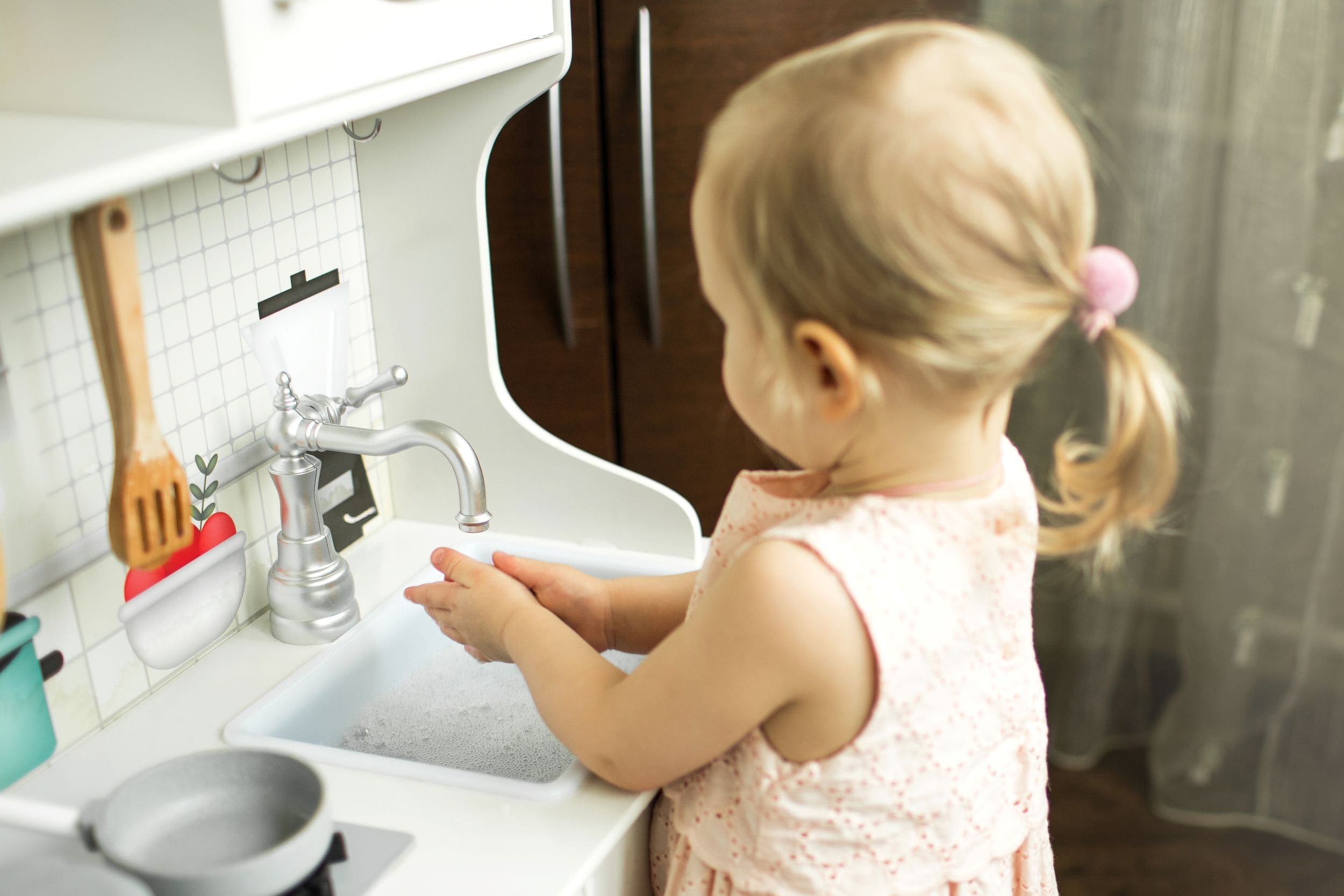
Make sure that children (and staff) are washing their hands effectively. Encourage them to follow the six-step technique endorsed by the World Health Organization, covering palms, backs of hands, between fingers and under nails. Children may find it difficult to remember these steps, so place visual prompts (like posters) at sinks to help them. Step stools and liquid soap dispensers help children reach sinks easily.
Hands should be washed on arrival, before and after eating, after toileting, after outdoor play and before going home. Children in nappies need an extra wash after each change. Younger children benefit from close supervision until they can complete the sequence with confidence and without help.
Daily cleaning schedules
A written cleaning rota helps ensure consistency. Toys used by babies and toddlers – who tend to put items in their mouths more often – should be disinfected at the end of each session. Resources for older children usually need a weekly clean.
Tables, chairs, high chairs, door handles, light switches and tablets need twice-daily disinfection with a mild bleach solution. Floors should be swept and mopped with disinfectant at least once a day, with any spill dealt with immediately. Soft furnishings such as cushions and dressing-up clothes should be laundered monthly following manufacturer guidance.
Infection control measures
Nurseries must follow NHS exclusion periods for illnesses such as diarrhoea, vomiting (usually 48 hours symptom-free) and streptococcal infections. If two or more linked cases arise, the nursery’s outbreak policy should be activated. This involves notifying the local Health Protection Team, deeper cleaning and staff briefings.
When dealing with nappies or bodily fluids, staff should wear disposable gloves and aprons and dispose of waste in double-lined, lidded bins. Routine immunisations – including influenza and MMR – can be encouraged through dated noticeboards and newsletters, helping maintain strong uptake within the nursery community.
Food safety and allergens – meal preparation and storage protocols
Clear routines, careful temperature control and strict allergen management are three key elements of food safety in nurseries. These steps reduce the risk of cross-contamination and keep children with specific dietary needs safe.
Meal preparation standards
In food-preparation areas, there should be a clear divide between handwashing sinks and food-prep stations. Staff should also use colour-coded chopping boards – for example, red for raw meat and green for vegetables – to keep foods separate.
Hot food must reach a core temperature of at least 75 °C, checked with a calibrated probe thermometer. Cold items should stay at or below 5 °C. Kitchen staff should change aprons and wash their hands between tasks, wear hairnets or hats and follow personal hygiene standards such as covered footwear and short, clean nails.
Allergen management
An up-to-date allergy register is essential. It should set out each child’s dietary needs, from lactose intolerance to coeliac disease, and be accessible to both kitchen and floor staff. Keep the original labels on pre-packed goods until they are used, and check ingredient lists daily.
Utensils and surfaces need thorough cleaning between allergen-free (e.g., no nuts) and standard meal preparation. Allergen-safe dishes should be prepared first to reduce the risk of airborne contamination.
Staff should feel confident about what to do if a child shows signs of a serious reaction, like anaphylaxis. This means knowing where auto-injectors are kept and checking they are in date. Staff should have the opportunity to practise the steps during regular training so that, in a real emergency, they can act quickly and calmly rather than be caught off guard.
Storage protocols
Refrigerated foods should be kept between 0 °C and 5 °C, with temperatures logged twice daily.
Dry goods belong in sealed, labelled containers in a cool, dark store and should be rotated on a first-in, first-out basis. Any expired or spoiled food must be discarded straight away.

Fire safety – alarms, evacuation routes and regular drills
Fire safety depends on the basics being in good order:
- Alarms must work
- Escape routes must stay clear
- Staff should have regular chances to rehearse what to do in the event of a fire
These things help ensure everyone is prepared to respond calmly in an emergency.
Fire alarm maintenance
All call points should be tested weekly, but instead of checking the same one each time, rotate through every point in the building so the whole system is covered over the month. Each test should be logged – time, date, who carried it out and whether anything needs attention – so patterns or faults are easy to spot.
Alongside these weekly checks, the full fire-alarm system should have an annual service by a qualified engineer. For standalone alarms, follow the manufacturer’s guidance on battery replacement, which is generally around once a year, to keep units reliable.
Evacuation route planning
Escape routes need to stay clear at all times. Illuminated exit signs and photoluminescent strips help guide children and staff if the power fails. Corridors, stairwells and doorways must remain unobstructed. Assembly points should be well marked and explained to staff, children and visitors.
Floorplans showing primary and secondary escape routes should be displayed at adult eye height throughout the building.
Drill schedules
Drills once per term help staff and children practise what to do in an emergency. It’s helpful to run these drills at different times of day. The fire log should record the date, start time, evacuation duration and any issues, such as delays in high-traffic areas.
A short debrief afterwards gives staff the chance to discuss what worked well and where changes may be needed. Update the fire risk assessment if drills highlight recurring concerns.
First aid in nurseries
Children’s physiology and responses to injury differ from those of adults, so nurseries need staff with sound paediatric training. Well-stocked, regularly checked first aid kits also play a key role. They must contain everything staff need to respond quickly and safely when accidents happen.
A member of staff with a full Paediatric First Aid (PFA) certificate must be present whenever children are on site. Certificates last three years, so refresher training should be arranged well before expiry. Many settings also offer short updates in basic life support or asthma management to keep staff confident.
A clearly labelled, portable kit should include:
- Plasters
- Sterile gauze dressings
- Triangular bandages
- Antiseptic wipes
- Disposable gloves
- Resuscitation masks
- Burn dressings
- Cold packs
- Eye-wash solution
- Tools for removing splinters
Be sure to check first-aid kits monthly to make sure everything is in date and replaced after use, and make a written record of any accidents. Record the child’s name, date, time, location, type of injury, treatment given and the signature of the practitioner who dealt with it. Parents should be told the same day, with their acknowledgment noted. Reviewing accident patterns each term can highlight problem areas, such as frequent bumps in a particular corner or an area of the playground causing falls.
Safeguarding and child protection
Every nursery has a core responsibility: protecting children from harm. Clear policies, regular training and reliable reporting systems help staff act quickly when concerns arise.
Each nursery needs a written child-protection policy based on the Department for Education’s “Keeping children safe in education” guidance. It should set out how concerns are recognised and reported, set expectations for staff conduct and outline the procedures for escalating concerns when something doesn’t feel right. A separate e-safety section should cover the safe use of tablets, social media and online materials.
New starters must receive safeguarding and Prevent duty briefings within their first week. (The Prevent duty is the requirement for education providers to help identify and respond to signs of radicalisation.) Full refresher training should follow at least once a year. Short updates between courses – such as email bulletins or brief team discussions – help staff stay aware of changes in legislation or emerging risks, including digital grooming or new radicalisation methods.
A designated safeguarding lead (DSL) and at least one deputy oversee initial assessments and make referrals to local authority children’s services. Concerns should be written up within 24 hours, stored securely and shared only when necessary.
Supervision ratios and staff deployment
When there are enough staff in the right places, children are safer and care feels calmer and more responsive. Ratios set the minimum requirements, but thoughtful deployment makes them work in practice.
For children under two, the required ratio is one adult to three children. For two-year-olds, it’s one to four. Children aged three and four need one adult for every eight children, or one for every thirteen when a member of staff holds a full and relevant Level 3 qualification.
Staff also need to be positioned so they can respond to incidents quickly. This includes using “key persons” for smaller groups and making sure float staff cover transitions such as outdoor play or mealtimes.
Staff need to take breaks, and illness-related absences will inevitably occur. Room-by-room rota charts help managers plan staff breaks without causing supervision ratios to drop below the required thresholds. Also, keeping a small list of trained relief staff available for short-notice cover reduces the chance of breaching statutory numbers during absences.
Regular team meetings provide space to flag pinch points – for example, busy drop-off periods – and discuss practical adjustments such as staggered start times or extra support from volunteers under close supervision.

Managing medicines in nurseries
Some children in nursery settings need to take medication, whether that’s insulin for a child with diabetes or antibiotics to fight an infection. However, administering any medication carries risks.
Parents must complete a written form stating the drug’s name, dose, frequency and duration, along with any known side effects or contraindications. Consent needs updating when prescriptions change or when a child returns to nursery after an extended absence.
Non-emergency medicines should be kept in a locked cabinet out of children’s reach. Store items that need refrigeration in a labelled box within a staff-only fridge kept between 0 °C and 8 °C. Controlled drugs, such as certain epilepsy medications, must be entered into a dedicated register with two staff members signing each dose in and out.
Two practitioners should be involved in every administration: one measures and gives the dose while the other checks the child’s identity, the medication, the dosage and the time. Each dose must be recorded in the medicines log, including any refusals or omissions. Parents receive a completed copy of the form at the end of the day to keep home and nursery records aligned.
Playing safely outside – equipment inspections and weather considerations
Outdoor play is beneficial and usually really enjoyable for young children. It supports physical development, builds confidence and teaches them how to manage risk – but the environment must be checked regularly to keep children safe.
Equipment inspection
Before every outdoor session, staff should carry out a visual sweep of the area. This involves walking around structures such as slides, swings and climbing frames to check for splinters, loose fixings or damaged surfacing.
A qualified inspector should carry out a more detailed assessment of the equipment each quarter, reviewing foundations, substrate depth and compliance with standards such as BS EN 1176.
Surface and boundary checks
Loose-fill surfacing under climbing equipment needs to stay at the recommended depth – usually around 300 mm for toddlers – so falls are cushioned properly. Clear out leaves, sticks and debris from drainage channels to avoid puddles and slippery patches.
Boundary fences and gates also need regular attention. Staff should look for gaps, loose panels or broken latches that could let a child wander out or allow someone to enter unnoticed. Gates should close securely, and any damaged sections must be repaired promptly. Keeping hedges trimmed prevents hidden corners and helps adults maintain clear sight-lines across the whole space.
Weather protocols
Outdoor play isn’t safe in all weather conditions, so staff need to be flexible and have contingency plans.
In summer, shade, hats, light clothing and sunscreen help prevent sunburn. During rain or cold spells, waterproof suits, boots and warm layers keep children comfortable. Indoor alternatives for high-energy play are useful when outdoor time is limited.
If forecasts indicate lightning, high winds or severe frost, the emergency weather plan should take effect. This may mean an indoor-only day or early collection if conditions worsen.
Visitor and volunteer procedures
When visitors enter the nursery, it brings risks. Clear checks, sign-in routines and close supervision keep children safe.
Vetting and DBS checks
Regular staff, long-term volunteers and committee members must hold an enhanced DBS check, renewed every three years. One-off visitors – such as entertainers or contractors – should be risk assessed to decide whether supervised access is enough or if they should also undergo a DBS check.
When a visitor arrives, staff should check their photo ID against a pre-approved list before allowing entry.
Sign-in/out procedures
Every visitor should be logged electronically or on paper, with their name, organisation, purpose of visit, arrival and departure times, and the staff member they are meeting. Badges or lanyards in different colours can help distinguish staff, volunteers and visitors at a glance. Contractors working in sensitive areas, such as bathrooms or sleep rooms, must be escorted and wear high-visibility clothing to make their presence clear.
Ongoing supervision
Visitors should never enter children’s toilets or rooms without a member of staff present. Clear signage and staff briefings help reinforce boundaries. If concerns arise about a visitor’s behaviour or purpose, staff should follow the whistleblowing policy and report the issue straight away to the nursery manager.
Being prepared in case of an emergency
Unexpected situations do happen in nurseries, and they can unfold quickly. When staff know exactly what to do – and have practised it – they can keep children safe while staying calm themselves. Clear, simple plans help everyone focus on the essentials instead of making decisions in the moment.
In any event, parents should be contacted quickly.
Power outages
Emergency lighting with battery backup should keep corridors and exits visible if the mains supply fails. A printed communication cascade listing key contacts – such as the electricity provider, emergency electrician and on-call manager – helps staff act promptly.
It can be helpful to keep charged mobile phones and spare power banks on site to enable swift communication.
If fridges lose power for more than four hours, cool boxes, ice packs and insulated bags can protect perishable food.
Severe weather
Nurseries should set clear thresholds for severe weather, such as wind speeds above 40 mph or temperatures below –5 °C. These markers help managers decide when to switch to indoor-only care or when to close the facility temporarily. Automated text alerts can keep families and staff updated using pre-approved message templates.
Managers should monitor local transport updates and arrange short-term accommodation for key staff if it becomes unsafe for them to travel home.
Gas leak
A suspected gas leak requires immediate evacuation. Staff should lead children away from the building without using electrical switches or mobile phones inside. Once outside, the National Gas Emergency number (0800 111 999) must be called, and the area kept clear until engineers confirm it’s safe.
Water leaks and flooding
Burst pipes or flooding can make areas unsafe or block toilets and handwashing facilities.
If this happens, staff should isolate the affected room, move children to a safe space and contact the relevant maintenance team or landlord. If large areas are unusable, managers may need to shorten the day or arrange early collection so repairs can take place.
Missing child
If a child cannot be found, staff should act quickly but stay calm. A headcount comes first, followed by checks of all rooms, toilets, outdoor areas and common hiding spots. A senior staff member should take charge so supervision remains safe.
If the child is not located within a few minutes, the police and parents must be contacted straight away. Staff should note key times and actions as they go. Usual routines resume only once the child is safely found and any follow-up checks on site security have been made.
Summing up
Strong health and safety practice grows through consistent routines, clear communication and steady attention to detail. When staff understand their responsibilities and trust the systems in place, children can enjoy learning and growing in a setting that feels safe and predictable.
Regular reviews and honest team discussion help you spot gaps early and make practical improvements. With these habits in place, safety becomes part of everyday nursery life.