In this post
Children thrive in early years settings that are warm and engaging. However, they also need to be hygienic and well organised to keep little ones – and staff – safe.
Strong hygiene routines limit the spread of infection and enable the childcare setting to comply with the Early Years Foundation Stage (EYFS). Hygienic practices also help families feel confident and support children as they learn early self-care skills.
This article outlines the core hygiene techniques every UK early years setting should use – from handwashing and nappy-changing protocols to cleaning schedules, waste disposal and outbreak management.
EYFS hygiene requirements and regulations
The EYFS statutory framework requires early years childcare providers to actively prevent infection and maintain a high standard of cleanliness. To comply with these expectations, they need to create and follow a set of written policies covering illness management, medicines, infection control and waste disposal. These should be easy for staff to access and be reviewed at least once a year or whenever Public Health England (PHE) updates its guidance.
Key elements of EYFS hygiene requirements include:
- A documented illness policy with specified exclusion periods for common infections (e.g., gastroenteritis, chickenpox, conjunctivitis)
- Procedures for safe storage, tracking and administering medicines, including parental consent forms and clear audit trails
- Risk assessments for all activities and environmental hazards, from pet interactions to outdoor play, ensuring that cleaning and supervision mitigate potential infection routes
- Staff training records demonstrating competence in Paediatric First Aid, Level 2 Food Hygiene and infection-control protocols
- Mechanisms to involve parents in hygiene practices, such as communicating any outbreaks promptly and offering guidance on preventing head lice.
Embedding these requirements in daily practice means building them into inductions for new staff, appraisals and ongoing training. Visual cues help keep expectations clear and front-of-mind (e.g., posters showing handwashing steps, colour-coded cloth charts, fridge-temperature logs).
A nominated hygiene lead should organise regular audits to check that policies are still active and that improvements happen when needed.
Personal protective equipment – gloves and aprons
Before moving into specific hygiene tasks, it’s important to set out the critical role of personal protective equipment (PPE).
Gloves and aprons create a basic protective barrier that helps stop germs from spreading during higher-risk activities. Staff rely on them for tasks such as nappy changing, managing spills involving bodily fluids or cleaning heavily used areas.
Latex-free, non-powdered gloves reduce the risk of allergies, and lightweight disposable aprons protect clothing from splashes. PPE should be stored somewhere adults can reach quickly but kept securely out of children’s reach.
Putting PPE on is simple – aprons first, then gloves – but removing it needs care as it could be contaminated. Gloves should be turned inside out as they come off, and aprons should be peeled away from the body to avoid transferring germs. Handwashing must follow straight away.
Routine stock checks help ensure supplies never run low. Clear visual reminders near PPE stations support consistent, safe use throughout the day.
Effective handwashing – when and how to do it
Handwashing is the simplest and most reliable way to stop germs from spreading in childcare settings. Children and staff should wash their hands several times throughout the day and always as follows:
- On arrival and before leaving
- Before and after handling food
- After toileting or nappy changes
- After outdoor or messy play
- After touching animals or their bedding
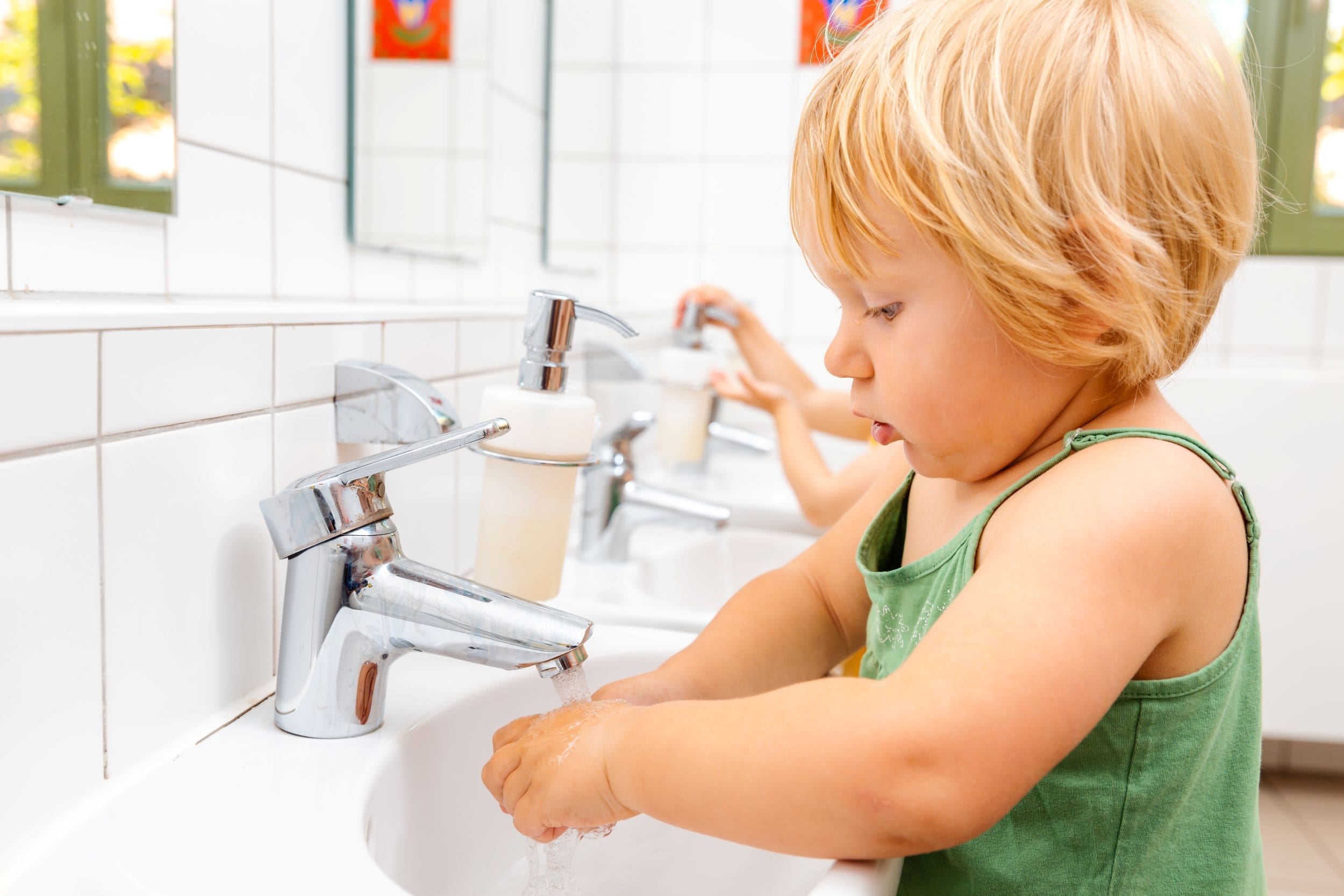
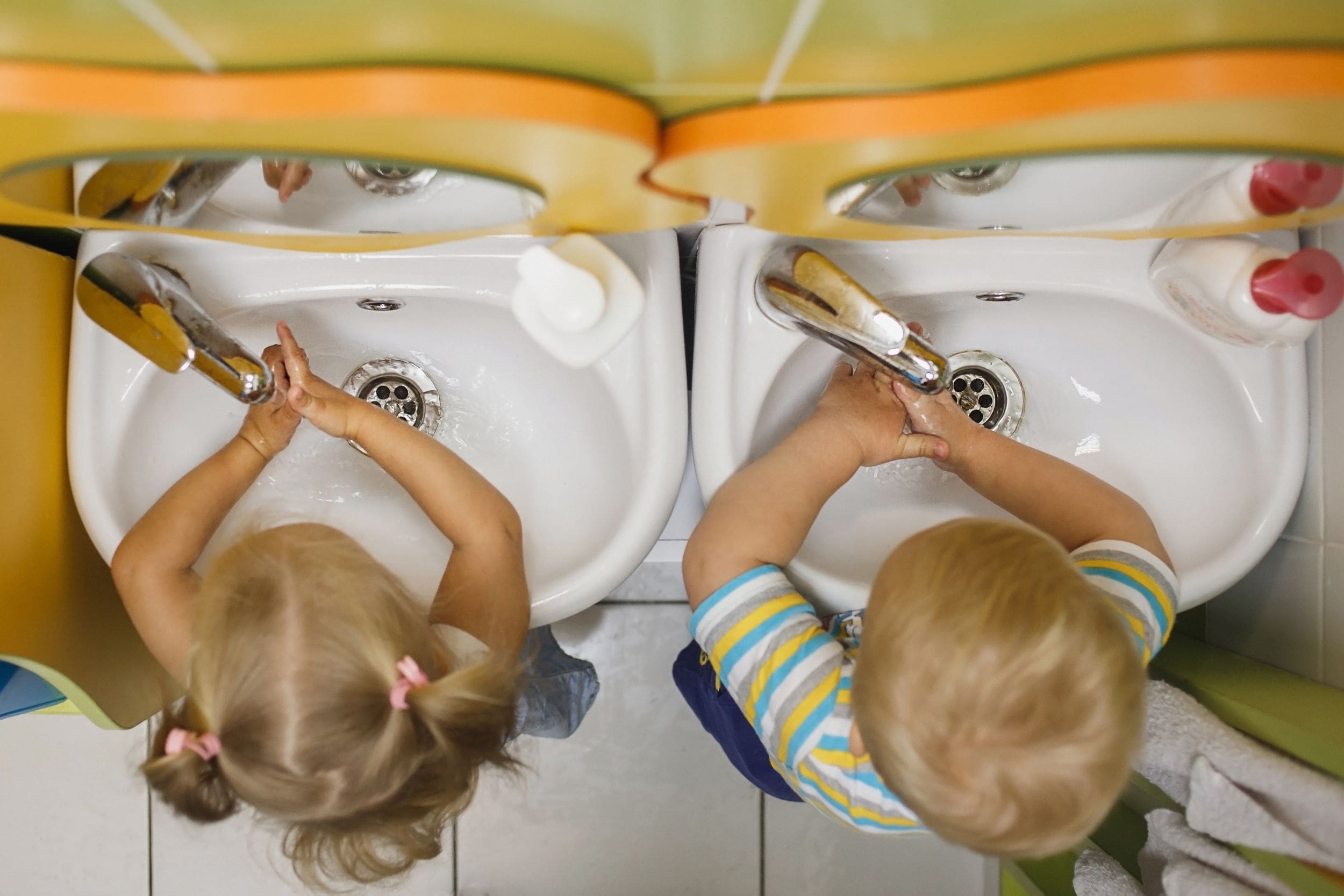
The best handwashing routine is a straightforward one: wet hands under warm running water, add liquid soap, lather for at least 20 seconds, rinse well and dry with single-use paper towels.
Child-height sinks, non-slip stools and bright pictorial guides make it easier for children to take part independently. They are also likely to follow an adult’s lead when they model the routine, showing them how it’s done. Gentle reminders and quick spot-checks keep habits on track.
Toilet and nappy-changing protocols
Toileting and nappy-changing carry a higher risk of spreading infection, so settings should put specific measures in place to keep people safe.
A dedicated changing area should look like this:
- Well-ventilated
- Easy to wipe down
- Equipped with a hands-free bin for soiled nappies
- Near a sink so that staff can wash their hands immediately
Staff should put on disposable gloves and an apron before each change, keeping only the essentials – clean nappies, wipes and any agreed barrier creams – within reach. After the change, the surface must be cleaned with a clinical-grade disinfectant and left for the recommended contact time.
Older toddlers who are beginning to take part in self-care can be gently encouraged to wipe or wash their hands, under supervision. This helps introduce them to the handwashing routine.
Recording each change in a simple nappy log – noting the time, any concerns and initials – helps keep communication with parents clear and can highlight early signs of illness.
Some children will be moving out of nappies and towards potty training. Again, gentle supervision is important. Encouraging them to flush, wipe correctly and wash their hands builds confidence and good habits.
Food preparation and mealtime cleanliness
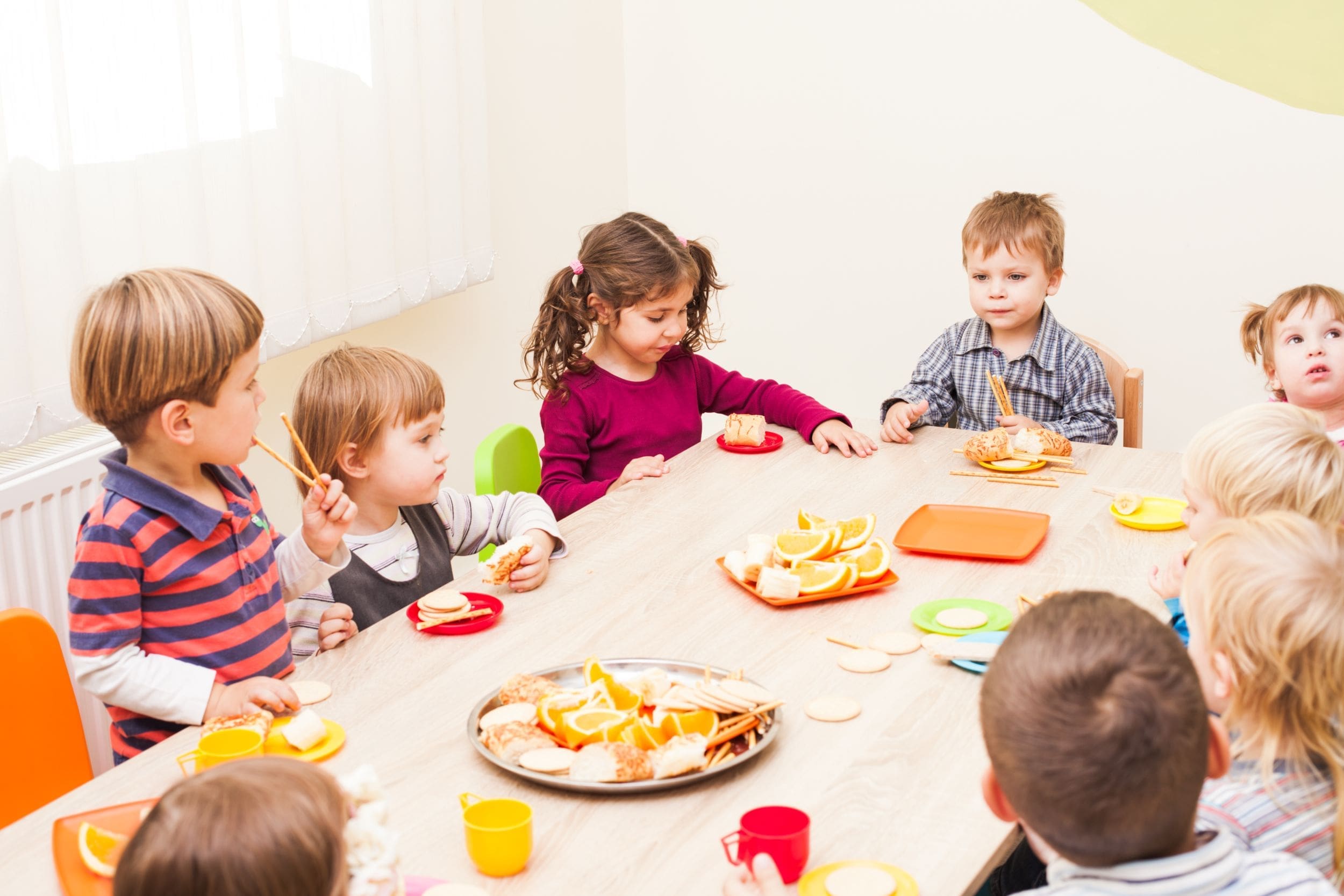
Nurseries handle all sorts of everyday foods – snacks like fruit, crackers and yoghurt, simple cooked lunches, bottles for babies and allergen-safe alternatives for specific children. Because young children are still building their immunity and often touch their food with their hands, even mild contamination can lead to illness.
The following food hygiene practices help keep children safe and help mealtimes run smoothly:
- Food handling should be overseen by a staff member with Level 2 Food Hygiene training.
- There should be clear separation between raw and ready-to-eat foods to avoid cross-contamination.
- Regular temperature checks keep chilled items at 5 °C or below and hot foods at 63 °C or above. These checks should be recorded.
- Short-sleeved uniforms, tied-back hair and minimal jewellery reduce the risk of food picking up bacteria.
- Colour-coded boards and utensils keep raw and cooked ingredients apart.
- After use, surfaces and tools should be washed in hot soapy water, rinsed, sanitised with a food-safe spray and left to air-dry.
- Tables, chairs and high-chairs should be cleaned in two steps: 1) remove visible mess with a detergent wipe, 2) apply disinfectant and leave it for the recommended time.
- Gently discourage food and utensil sharing. For example, each child should have their own cup and plate.
Managing bodily fluids safely
Spills involving vomit, urine or blood can cause germs to spread, so they need to be dealt with quickly.
Each room should have a small spill kit stocked with disposable gloves, aprons, absorbent granules, paper towels and a disinfectant approved for use in early years settings.
- Put on PPE – staff should wear the correct protective equipment before going near the spill.
- Contain the spill – gently cover the area with absorbent granules or paper towels to stop the liquid spreading.
- Apply disinfectant – once contained, pour or spray disinfectant over the area and leave it for the full recommended contact time so it can work effectively.
- Wipe up the residue – use fresh disposable cloths to remove everything, then apply a second round of disinfectant.
- Let the surface air-dry – avoid wiping it dry so the disinfectant can finish working.
- Dispose of materials safely – place all used cloths, towels and granules into a clinical-waste bag, seal it tightly and store it securely until collected by a licensed carrier.
Record incidents, noting the time, location and actions taken. When these logs are reviewed monthly, patterns often appear – for example, a particular area that needs extra supervision or a child who may need support.
Keeping equipment and toys clean
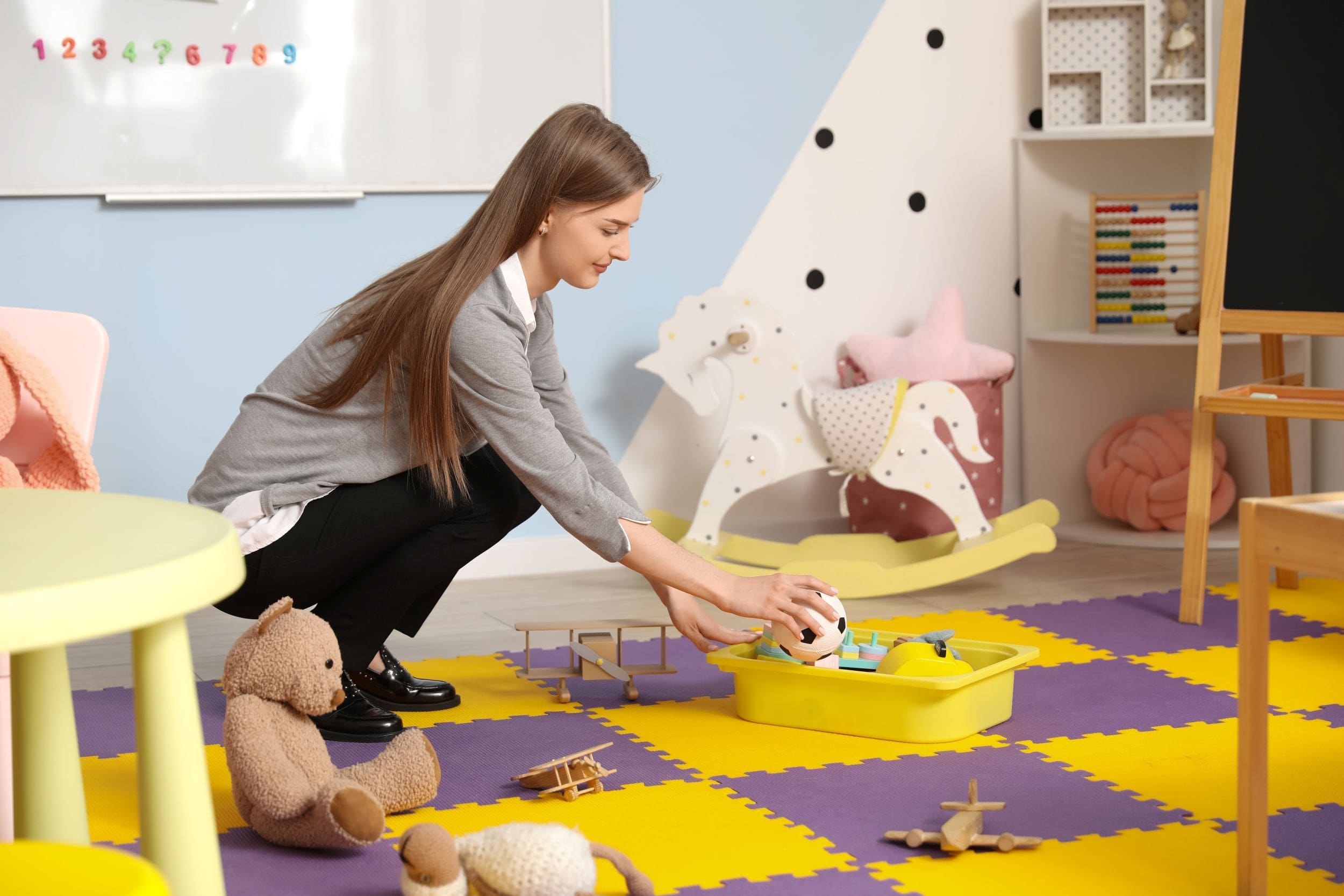
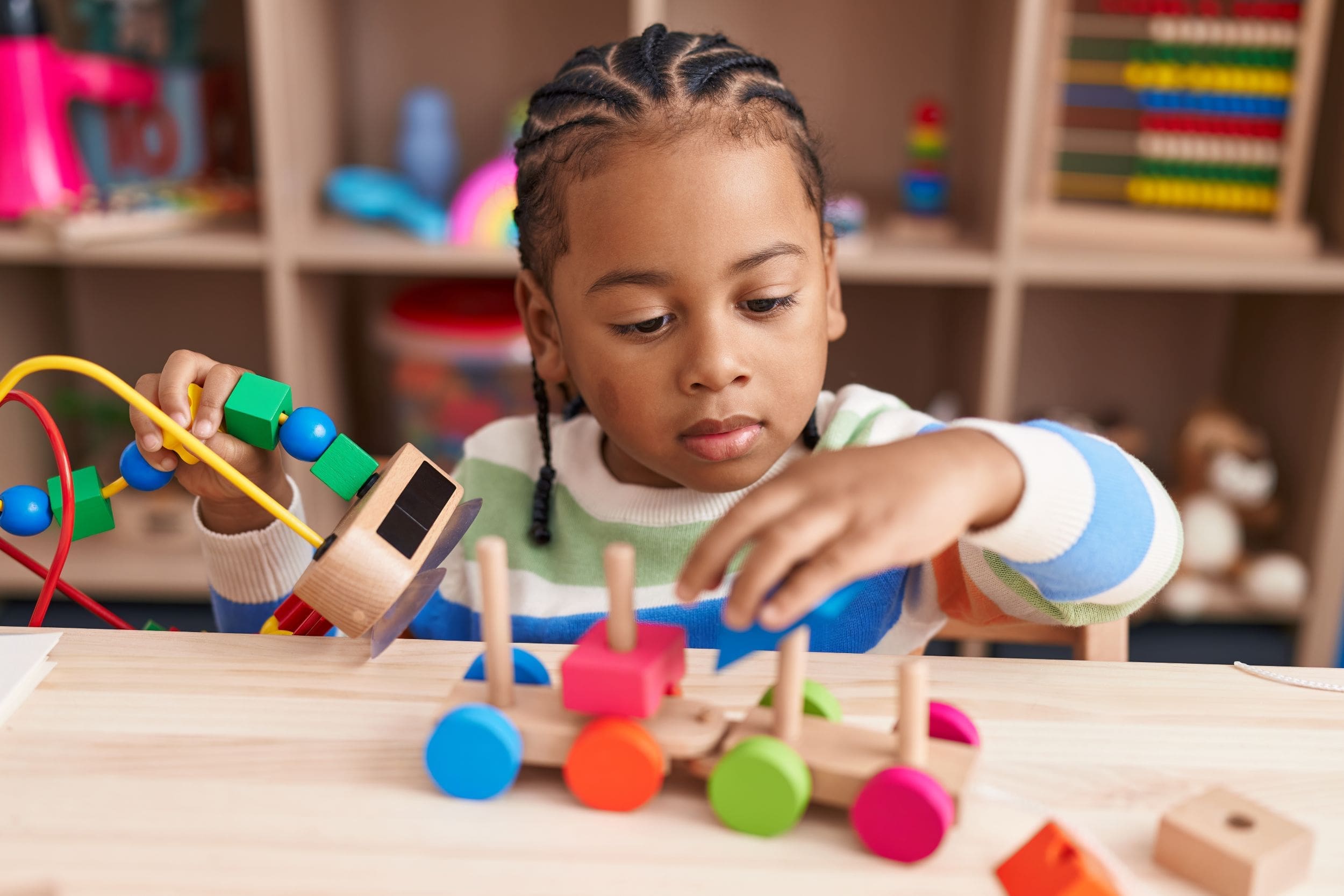
Nurseries use an enormous mix of resources every day, from building blocks and puzzles to dressing-up clothes, craft tools, tablet screens and outdoor toys. Because so many hands touch these items, a steady cleaning routine keeps the environment healthy without getting in the way of play.
Daily and weekly routines:
- High-touch areas such as door handles, tables, switches and shared tools cleaned each day
- Toys and larger equipment cleaned on a rolling weekly schedule, with extra rounds if illness is circulating
- Hard plastic toys washed in warm, soapy water, sprayed with child-safe disinfectant and left to air-dry
- Soft toys and fabric props machine-washed at 60 °C to stay fresh
- Outdoor toys given a weekly wipe-down and a quick safety check
Soft furnishings:
- Bedding, blankets and nap-time mats washed weekly and dried fully to prevent dampness
- Spare sets kept ready for quick swaps when something is soiled
- Cushions chosen with removable covers for easier cleaning
- Carpets steam-cleaned occasionally to lift the dirt that hoovers miss
Good organisation keeps everything running smoothly. Cleaning products stay locked away, microfibre cloths are washed often so they stay effective, and laundry bags or baskets help keep clean and used items separate.
Waste disposal – sharps, clinical and general waste
Anything sharp – such as broken glass or needles – must go straight into a rigid, puncture-resistant sharps bin. These bins should be mounted securely and replaced once they are about three-quarters full. At this point, it must be locked, labelled and collected by a licensed clinical-waste provider. Settings usually arrange scheduled collections through their local authority or an approved private contractor. No sharps bin should ever be left to overflow.
Items contaminated with bodily fluids, including used gloves, aprons and dressings, count as clinical waste. These should be placed in yellow-lined, coded bags that are sealed and stored safely until collected for incineration. Each bag needs clear labelling with the setting’s name, date and waste type, and the related waste-transfer notes must be kept for at least two years.
General waste, such as food wrappers, tissues and non-recyclable plastics, can be bagged in standard sacks and removed daily to prevent smells and pests.
Recycling can be a small but meaningful part of children’s learning. Clean paper, cardboard and plastics can go into colour-coded recycling bins where local services allow.
Clear labels with pictures help even very young children sort items correctly, and simple “recycling helpers” jobs – passing staff the correct bin, spotting where cardboard should go – help them feel involved. A small collection project, such as gathering bottle tops or cardboard tubes for art activities, adds purpose without turning recycling into a competition. These gentle routines show children that waste has a place and that tidying up is part of looking after their environment.
Choosing bins with foot pedals, stable bases and secure lids stops children from touching the contents or lifting lids out of curiosity. Regular checks help pick up loose liners, broken hinges or leaks so problems can be fixed quickly. Bins themselves need cleaning, too. Wiping and disinfecting them weekly keeps odours down and reduces the spread of bacteria.
Cleaning schedules and record-keeping
A clear cleaning schedule helps everyone know what needs doing and how often.
Some tasks sit with room staff – such as wiping tables between activities or cleaning toys – while deeper cleans, floor care and end-of-day routines are usually handled by dedicated cleaning staff or external contractors. The main schedule should outline each task, its frequency and who completes it.
Checklists for individual rooms or areas make it easy for staff to tick off jobs as they go and note anything that needs attention. Records can be kept in a logbook or in a simple digital system, as long as they are easy to review when needed. Managers or hygiene leads should check these records regularly to make sure routines are being followed and to pick up on any gaps.
Keeping clear records makes it possible to run quarterly audits, which help keep standards high. Cleaning audits are a chance to spot patterns, recognise what is working well and identify areas that could be improved. Sharing the findings in staff meetings encourages a sense of shared responsibility.
Handling outbreaks – exclusion periods and deep cleans
When several children come down with the same illness, quick action helps prevent it from spreading further – inside and outside the childcare setting.
PHE guidance sets out clear exclusion periods – for example, children must stay at home for 48 hours after their last episode of sickness or diarrhoea. Ensure families are aware of this ahead of time so they can make the right choices. If an outbreak occurs, remind them of this expectation promptly through letters, emails or notices.
Any suspected outbreak (usually two or more linked cases) should be reported to the local health protection team, who can advise on next steps. Once things return to normal, the facilities and equipment will need to undergo a deeper clean than usual. This includes washing all soft furnishings at high temperatures, disinfecting toys and high-touch surfaces and, where needed, steam-cleaning carpets.
If the health protection team or a contracted cleaning service recommends an additional method – such as a fogger or virucidal spray – this can be added to the plan.
Educating children on personal hygiene
Teaching children about hygiene helps them build habits that will stay with them as they grow.
Short, practical activities work best. Simple demonstrations – such as using glitter gel to show how “germs” stick to hands – make the idea easy to grasp. Picture prompts above sinks and toilets support the five steps of handwashing and help children remember what to do.
Role play can also help, but it needs to stay age-appropriate. Pretend kitchens, baby dolls and water-play areas give children chances to practise wiping hands, “washing” toy dishes or caring for a doll – small, familiar actions that mirror real life. Gentle praise, stickers or small “super-washer” notes can encourage reluctant washers without turning it into a competition.
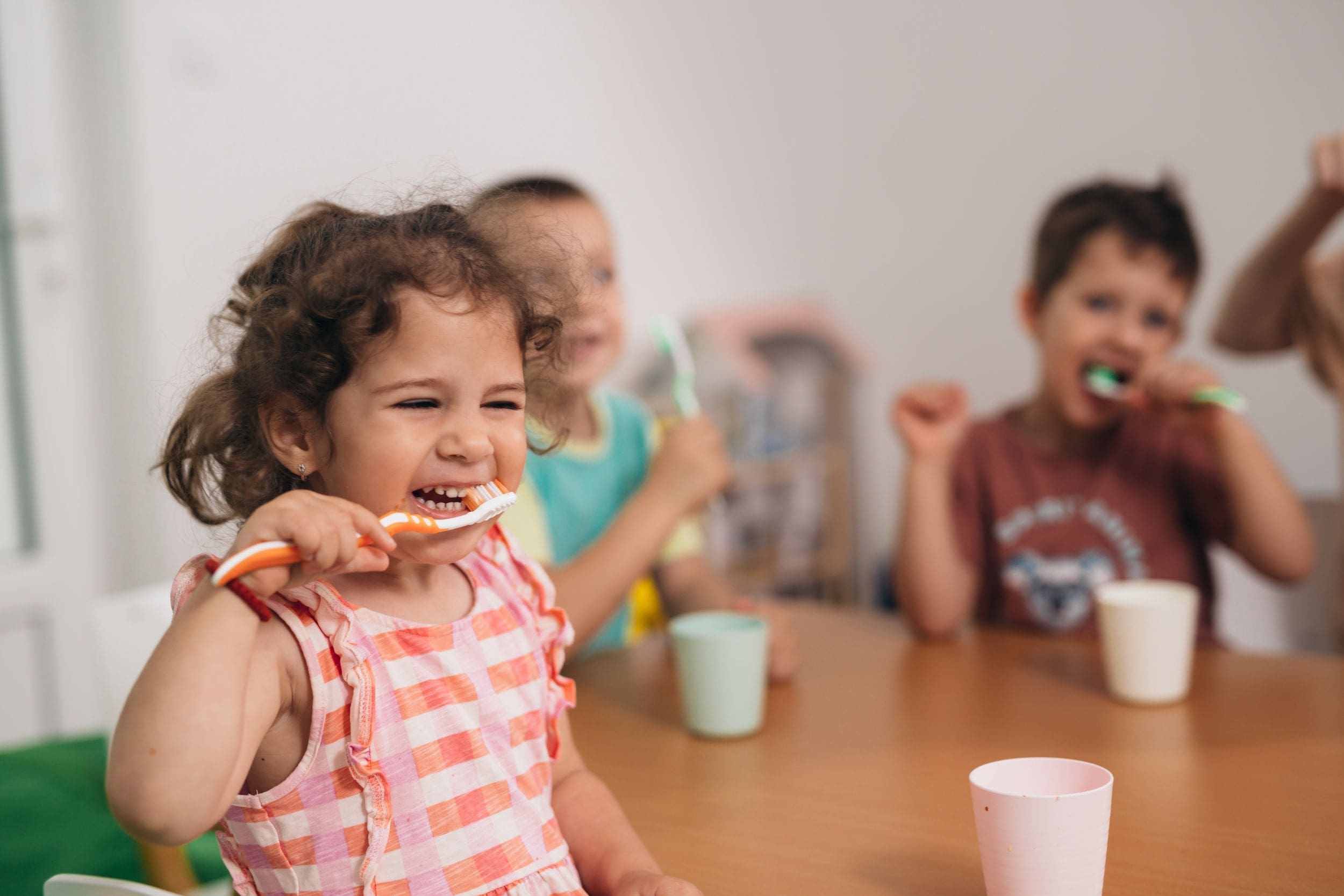
Giving each child their own labelled hygiene items, such as a toothbrush or towel, supports independence and keeps personal care consistent.
Let families know what personal hygiene skills the children are learning – through newsletters, photos or quick chats. They can then help extend these habits at home. When hygiene is woven into daily play and conversation, it becomes second nature.
Staff training and policy review
Good hygiene relies on confident, well-informed staff. Induction should cover the essentials – EYFS hygiene expectations, safe spill management, PPE use and handwashing routines – with plenty of chances for staff to practise and ask questions. New starters often learn best by shadowing a colleague for the first few days and practising these tasks in real time.
Short refreshers every few months help keep everyone up to date with new guidance, products or health requirements for specific children (e.g., nut allergy).
Rather than formal observations, quick check-ins during the day – noticing whether handwashing steps are followed or whether PPE is stocked where it should be – help identify anything that needs topping up or clarifying.
Policies also need regular attention. A twice-yearly review is usually enough to keep them current and make sure they still reflect what actually happens on the floor. Staff feedback is invaluable here; they are the ones who spot what works and what slows things down. Some settings also bring in an external trainer annually to offer updated guidance or demonstrate new techniques, which can give the team a useful confidence boost.
Summing up
Strong hygiene routines make early years settings safer and calmer for everyone. When clear policies, regular training and everyday habits work together, children benefit from a clean, predictable environment where they can play and learn with confidence. Small, consistent actions from the whole team protect health, reduce stress and help the setting run smoothly.