

In this post
De-escalation is not about ‘winning’ a moment. It is about keeping everyone safe, protecting learning time, and helping a pupil return to regulation with dignity intact. For teaching assistants (TAs) in the UK, that means using calm, predictable strategies that fit your school behaviour policy, your safeguarding duties, and the needs of individual pupils – including those with special educational needs and disabilities (SEND), trauma histories, or high anxiety.
In real classrooms, escalation rarely starts with a bang. It usually starts with small signals: a change in breathing, a refusal that sounds sharper than usual, a pupil scanning the room, a sudden “leave me alone”, a chair rocking faster. When you can notice those early cues and respond with skilled, low-arousal support, you often prevent the bigger incident entirely.
This guide gives you practical tools you can use straight away: early warning signs, safe body language, scripts, step-by-step responses, and guidance for common flashpoints like transitions, refusals and sensory overload. It also covers when to call for help, how to record incidents (including ABC forms), and how to repair relationships afterwards so your support improves over time.
What is De-escalation?
De-escalation is a set of choices you make in the moment to reduce threat, reduce demand, and increase a pupil’s sense of safety and control. The goal is not compliance at any cost. The goal is regulation first, problem-solving later.
A useful way to think about it is: connect, reduce, guide.
- Connect: Show the pupil you are safe, calm, and on their side.
- Reduce: Lower the heat by lowering demands, audience, noise and pressure.
- Guide: Offer a simple next step and support them back to learning or a safe space.
In UK schools, good de-escalation sits alongside behaviour policies and safeguarding expectations. It also supports inclusion duties under the Equality Act 2010 and the graduated approach described in the SEND Code of Practice. It aligns with the principle that behaviour is communication, and that pupils often escalate when their nervous system is overwhelmed.
A TA’s role is especially powerful because you are often the adult closest to the pupil, physically and relationally. Any small adjustments you make – where you stand, how you speak, how quickly you move – can be the difference between escalation and recovery.

Early Signs of Escalation in Pupils
Most pupils give signals before they tip into conflict or distress. Your job is to spot the pattern for that pupil, not just generic ‘bad behaviour’. For one child, escalation begins with silence. For another, it begins with humour, arguing, or pacing.
Common early signs include:
- A sudden change in voice – quieter, sharper, or unusually loud.
- Increased fidgeting, tapping, rocking, or repetitive movement.
- Avoiding eye contact or staring intensely.
- Refusal language that ramps up (“No”, “I’m not doing it”, “Make me”).
- Rapid breathing, sighing, clenched jaw, flared nostrils.
- A jump in ‘justice talk’ (“It’s not fair”, “You always pick on me”).
- Scanning the room, focusing on exits, standing up abruptly.
- Fixating on a peer, a perceived slight, or a rule.
- Small acts of control: ripping paper, snapping pencils, pushing books away.
What early signs mean in practice
Early signs do not always mean a pupil is choosing to be difficult. Often, they are showing you that their brain is moving into threat mode. When that happens, language processing drops, impulse control drops, and the pupil becomes less able to tolerate demand. This is why repeating instructions, raising your voice, or insisting on eye contact often makes things worse.
A simple TA habit that helps: name what you see without judgement.
Examples:
- “I can see your hands are really busy.”
- “You’ve gone very quiet.”
- “You’re breathing fast. Something feels hard right now.”
That kind of observation can be grounding. It also gives you information you can pass on later when reflecting with staff.
Staying Calm: Tone, Posture and Space
When a pupil is escalating, your nervous system ‘talks’ to theirs. If you look rushed, tense, or confrontational, you increase threat. If you look steady and unbothered, you lower it.
Tone: Calm, low, and slower than you think
Aim for:
- Short sentences.
- Neutral language.
- A warm, steady tone.
- A slower pace with pauses.
Avoid:
- Sarcasm, lectures, or “Why are you doing this?”
- Rapid-fire instructions.
- Public challenges (“Say sorry. Now.”)
- Threats you can’t follow through on.
A helpful rule: your tone should sound like you can cope.
Posture: Open and non-threatening
Use:
- Relaxed shoulders.
- Hands visible and still.
- A slight sideways stance (less confrontational than square-on).
- A soft facial expression.
Avoid:
- Arms folded.
- Pointing.
- Looming or leaning in.
- Blocking the pupil’s exit.
Space: Protect dignity and reduce audience
Escalation often grows when a pupil feels watched. If you can, reduce the audience.
Practical options:
- Step slightly to the side so peers aren’t staring past you.
- Use a quiet cue to the class teacher to redirect the group.
- Offer the pupil a face-saving route: “Let’s take this over here.”
Think in terms of personal space plus escape space. Pupils often escalate when they feel trapped. You can increase safety simply by ensuring they have a clear path away from the demand.
De-escalation Scripts TAs Can Use
Scripts work because they keep you consistent under pressure. They also reduce power struggle language. The best scripts are short, calm and repeatable.
Script set 1: Acknowledge + reassure + next step
- “I can see this is hard. I’m here. Let’s take one step.”
- “You’re not in trouble. We’re getting you settled.”
- “I’m listening. First we get calm, then we talk.”
Script set 2: Offer help without arguing
- “Do you want help starting, or do you want two minutes first?”
- “I can explain it again, or I can show you the first one.”
- “Let’s make this smaller. We’ll do the first bit together.”
Script set 3: Boundaries without threats
- “I can’t let you hit. I will keep everyone safe.”
- “You can be angry. You can’t throw chairs.”
- “I’m going to step back so you’ve got space. I’m staying close.”
Script set 4: Broken record for repeated refusals
Pick one calm line and repeat it, unchanged:
- “We can do it now, or after two minutes.”
- “Hands stay down. I’m here to help.”
- “We talk quietly, or we pause.”
Repetition matters because escalating pupils often cannot process new information. A consistent phrase becomes an anchor.
Script set 5: Repair-in-the-moment
- “Let’s reset. We both want this to go well.”
- “I’m going to give you space. I’ll check back in a minute.”
- “We can try again. You’re not stuck.”
Choices and Boundaries Without Power Struggles
Choices are not bribery. They are a way to give a pupil control without giving up the boundary. The key is to offer two acceptable options, both of which you can live with.
Good choices:
- “Do you want to write with pencil or pen?”
- “Do you want to start with question 1 or question 3?”
- “Do you want to sit here or at the side table?”
- “Do you want to talk now or in five minutes?”
Choices that cause power struggles:
- “Do you want to work, yes or no?” (that is not a choice)
- “If you don’t do this you’ll miss break.” (threat escalation)
How to hold a boundary calmly
A boundary is strongest when it is plain and non-emotional.
- State the boundary: “Feet stay on the floor.”
- State the support: “I’ll help you settle.”
- Offer the choice: “You can sit here or stand by the wall for one minute.”
- Pause: Give processing time.
If the pupil argues, avoid debating. Debating turns it into a contest. Instead, return to your single line calmly.
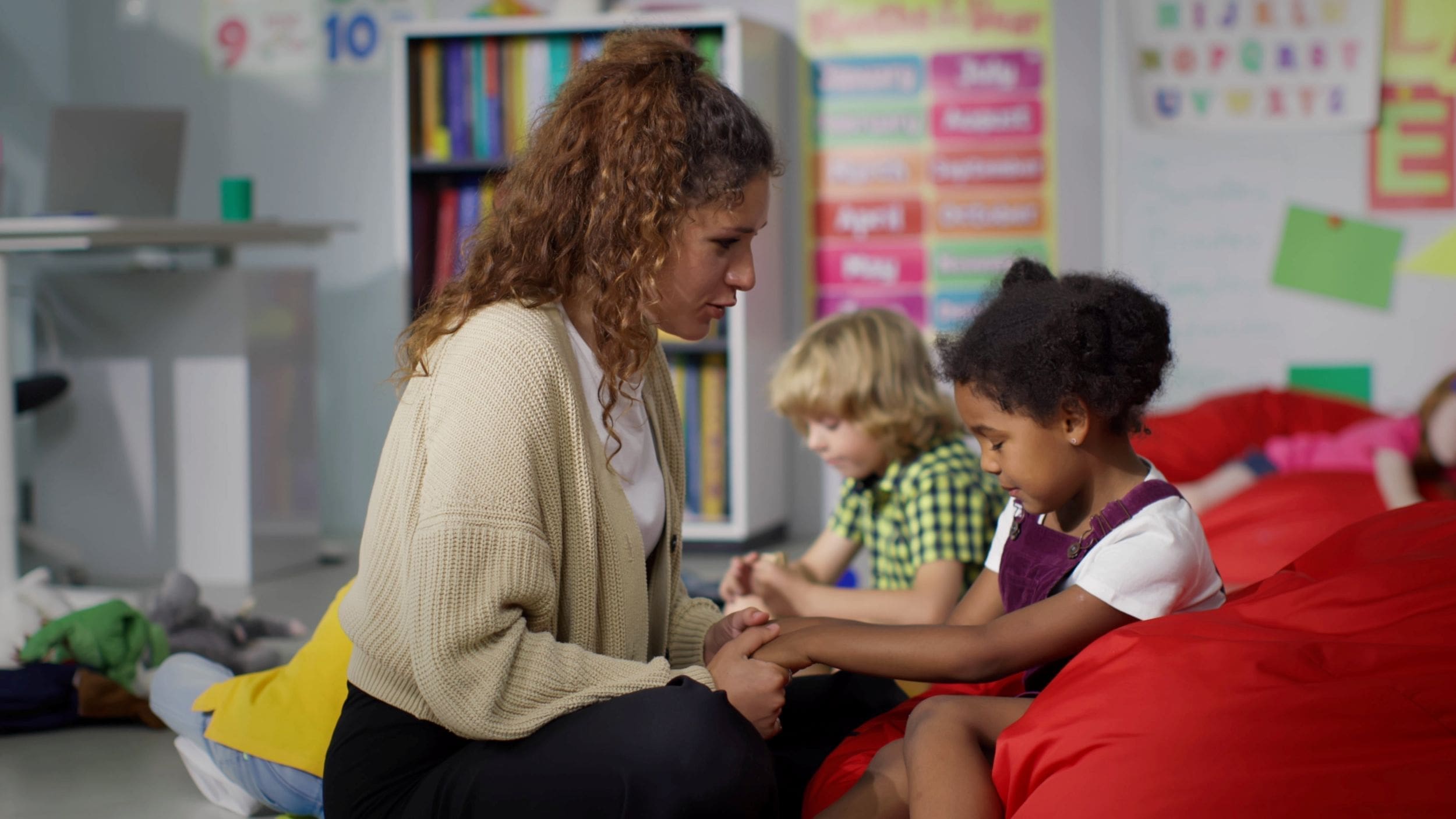
Reducing Demands and Giving Processing Time
A very common escalation trap is ‘stacking demands’. A pupil is already overwhelmed, then they get:
- Instructions
- Reminders
- Warnings
- Consequences
- Moralising
- Repeated questions
All in 30 seconds.
For an overwhelmed pupil, that can feel like being chased.
Reduce demands safely
Ways to reduce demand without ‘letting it slide’:
- Reduce the task size: “Just the first two lines.”
- Reduce the output: “Tell me the answer, I’ll write it.”
- Reduce the time pressure: “We’ll come back to this after you breathe.”
- Reduce the audience: “We’ll do it away from the group.”
- Reduce the language load: Use visuals, point, show, gesture.
The power of processing time
Many pupils need more time to switch gears, especially autistic pupils and those with ADHD. After you give a choice or instruction, try:
- Pause for 5-10 seconds (it will feel long, but it helps).
- Keep your face neutral and your body still.
- Avoid filling the silence with more talk.
If you need to speak again, repeat the same words rather than adding new information.
Using Distraction and Redirection Safely
Distraction is not ‘ignoring behaviour’. It is a regulated adult guiding attention away from a trigger and towards a safer channel, before things explode.
Safe distraction is subtle and respectful. It should not humiliate the pupil or look like a trick.
Safe redirection ideas
- Practical task: “Can you carry these books to the shelf?”
- Body break: “Let’s get a drink and come back.”
- Role-based request: “I need your help with the timer.”
- Sensory reset: “Let’s do ten wall pushes.”
- Interest hook: “Tell me which one looks most like a volcano.”
The key is that the redirected action must be easy to succeed at. If you redirect them into something hard, you increase frustration.
What to avoid
- “If you calm down I’ll give you…” (can create bargaining).
- Public jokes at their expense.
- Sudden touch or grabbing to move them (unless immediate safety risk and trained/authorised).
- Taking belongings in a tug-of-war (it turns into a contest).
If the pupil is close to loss of control, focus on space and safety, not clever distraction.
Supporting Sensory Overload in School
Sensory overload can look like defiance, but it is often a nervous system problem. Noise, light, crowding, smell, clothing discomfort, and unpredictable touch can all push a pupil into fight-or-flight.
Signs of sensory overload may include:
- Covering ears, flinching, grimacing.
- Increased movement, pacing, bolting.
- Sudden anger or tears with no obvious ‘reason’.
- Avoiding certain areas (hall, canteen, corridors).
- Intense refusal at specific times (assembly, lining up).
Practical TA strategies
- Reduce input fast
- Move away from noise.
- Offer a quieter space.
- Lower your voice and language.
- Offer sensory tools if agreed
- Ear defenders.
- A fiddle item.
- A now-and-next card.
- A calm corner routine.
- Use predictable steps
- “First we step into the quiet space. Then we breathe. Then we decide next.”
- Help the pupil save face
- “You’re not in trouble. Your body needs a reset.”
If your school uses a sensory plan or pupil passport, stick to it. Consistency is calming.
For general guidance on sensory differences, many staff find The National Autistic Society helpful.
De-escalation for Autistic Pupils
Autistic pupils may escalate when there is uncertainty, sensory overload, unexpected change, social confusion, or demand that exceeds capacity in that moment. De-escalation works best when it reduces ambiguity and increases predictability.
Key principles
- Say what you mean, mean what you say.
- Use fewer words.
- Allow extra processing time.
- Offer clear structure
- Avoid public correction where possible.
Helpful approaches
Use ‘now and next’ language
- “Now: quiet space. Next: choose break or water.”
Use visual support
If a pupil struggles to process spoken language when stressed, visuals can be the difference between escalation and recovery.
Avoid figurative language
In a high-stress moment, phrases like “pull yourself together” can confuse or inflame.
Respect shutdown
Some autistic pupils do not explode. They collapse inward. They may go silent, stop moving, or refuse to engage. This is still distress. Reduce demand and offer a low-pressure way back:
- “You don’t have to talk. I’ll sit here. When you’re ready, show me thumbs up.”
Plan for transitions
Autistic pupils often need more scaffolding for change. Prepare with countdowns, visuals, and a predictable script (more on this in the transitions section).
For evidence-based approaches used in UK settings, staff often refer to resources like Ambitious about Autism for practical guidance and training information.
De-escalation for ADHD and Impulsivity
Pupils with ADHD may escalate quickly because the ‘pause button’ is weaker, not because they don’t care. Impulsivity, emotional intensity, and difficulty shifting attention can make conflict flare fast.
What helps in the moment
- Fast, simple instructions: One step at a time.
- Movement as regulation: Short, purposeful movement breaks.
- Immediate success: Tasks that start easy.
- Calm limit-setting: Consistent and brief.
- Externalise time: Timers and visual countdowns.
Scripts that work well for impulsivity
- “Pause. Breathe. Then choose.”
- “Hands down. We can fix this.”
- “Walk with me. We’ll sort it.”
Use ‘do, then talk’
With ADHD pupils, talking first can become a spiral. A quick regulating action first often helps:
- Drink of water.
- Wall pushes.
- Carrying a note.
- 30-second walk with an adult.
For staff-friendly information on ADHD, NHS ADHD overview guidance can be a useful baseline reference.

Managing Refusals and Work Avoidance
Refusal is one of the biggest TA flashpoints because it can feel personal. Yet refusal is often a stress signal. Pupils refuse when they feel:
- Incapable (“I can’t”).
- Unsafe (“This is too much”).
- Ashamed (“If I try, I might fail”).
- Controlled (“You can’t make me”).
- Dysregulated (“My body is too loud inside”).
Step-by-step response for refusals
- Regulate the moment
- Lower your voice.
- Reduce language.
- Offer space: “I’ll step back.”
- Remove the power contest
Avoid: “Yes you are. Do it now.”
Use: “Okay. We’ll make a plan.” - Offer two choices
- “Start with one question or start with me?”
- “Write two sentences or tell me and I’ll write?”
- Make it smaller
- “Just underline the title.”
- “Just open your book.”
- “Just choose a pen.”
- Use a time boundary
- “Two minutes, then we choose a start.”
- Return to learning with dignity
- “Nice. You’re back in it. Let’s keep it small.”
Avoid common traps
- Public stand-offs.
- Repeating the instruction louder.
- Listing consequences rapidly.
- Removing break time as your only lever.
- “Because I said so” (it fuels the control battle).
If refusal is frequent, it needs proactive work: task adaptation, confidence-building, and consistent routines – not just stronger consequences.
De-escalation During Transitions and Break Time
Transitions are high-risk because they combine movement, noise, social unpredictability and time pressure. Break time adds peer conflict, crowding and loss of adult structure.
Transitions: Make change predictable
Helpful TA strategies:
- Use a countdown: “In 5, we pack away. In 2, we stand up.”
- Use a job: “You’re the door holder” or “Carry the register.”
- Use a first-then: “First line up, then choose a fidget.”
- Use consistent language: The same words every time.
- Use visual prompts: Now-and-next cards or a mini schedule.
A powerful strategy is ‘transition rehearsal’ when calm:
- Practise lining up.
- Practise walking the corridor.
- Practise entering the hall.
Do it like a drill, but warm and encouraging.
Break time: Prevent escalation before it starts
Before break:
- Remind the pupil of one simple goal: “Safe hands and walking feet.”
- Agree a help signal: Thumbs up, card, or “I need a break.”
- Identify a safe base: Bench, zone, or named adult.
During break:
- Scan for early signs: Pacing, peer targeting, rule disputes.
- Step in early with calm redirection: “Walk with me. Reset.”
After break:
- Support a reset routine before class: Drink, breathing, quiet seat, short task.
If your setting supports structured transition approaches, early years transition guidance can still be useful for thinking about predictability and routine, even in older pupils. You may find ideas in resources like Education Endowment Foundation guidance on behaviour and classroom routines.
When to Call for Help and Follow Policy
De-escalation is not doing everything alone. Part of safe practice is recognising when you need support.
Call for help when:
- A pupil is at risk of harming themselves or others.
- Weapons or dangerous objects are involved.
- The pupil is attempting to leave the site or enter unsafe areas.
- There is serious property damage (especially glass, chairs, heavy objects).
- You feel out of your depth or your presence is escalating the pupil.
- The pupil is non-responsive to usual regulation strategies and is deteriorating.
Follow your school’s system
Know your setting’s:
- On-call process.
- Code word or radio procedure.
- Safe spaces and who supervises them.
- Positive handling policy.
- Safeguarding reporting route (including DSL).
Your behaviour policy matters here. Consistency protects pupils and staff. It also protects you. If you are unsure in the moment, default to safety and call for support early rather than late.
For safeguarding expectations, schools in England work under Keeping children safe in education, which reinforces the importance of clear reporting and professional curiosity.
Recording Incidents and ABC Forms
Recording is not paperwork for the sake of it. Done well, it turns incidents into learning: patterns become visible, triggers become clearer, and support becomes more targeted.
What to record (keep it factual)
- Date, time, location.
- Who was present (adults and pupils).
- What happened, in sequence, using neutral language.
- What de-escalation strategies were used.
- Any injuries or damage.
- How it ended and how the pupil recovered.
- Who was informed (teacher, SLT, parents, DSL if needed).
Avoid judgement statements like “He was being manipulative” or “She went crazy”. Stick to observable facts:
- “Pupil shouted, ‘Leave me alone’, pushed chair back, left seat, and kicked the table leg twice.”
ABC forms: A simple structure
ABC stands for:
- A – Antecedent: What happened before.
- B – Behaviour: What the behaviour looked like.
- C – Consequence: What happened after (adult response, peer response, outcome).
Example:
- A: Asked to stop iPad and start writing. Peer laughed nearby.
- B: Pupil tore sheet, shouted, left seat, pushed past adult.
- C: Adult stepped back, used calm script, offered quiet space, pupil sat in calm corner for 5 minutes, returned with adapted task.
Over time, ABC data helps answer:
- Which demands trigger escalation?
- Which times and places are hardest?
- Which adult responses shorten incidents?
- Which supports prevent repeat escalation?
If behaviour is persistent, ABC patterns can feed into a behaviour plan or SEND support plan, and can strengthen evidence for graduated support.
Repairing Relationships after Incidents
Repair is not ‘letting it off’. Repair is how you rebuild trust so the pupil is more able to cope next time. Many pupils feel shame after escalation, even if they act tough. If they believe adults now dislike them, they often escalate faster the next time because they expect rejection.
The 3-step repair conversation
When the pupil is calm and ready:
- Reconnect
- “I’m glad you’re back. I’m not cross with you.”
- Reflect briefly
- “What was the hardest part about that moment?”
- If they can’t answer, offer a choice: “Was it the noise, the work, or the change?”
- Plan one next step
- “Next time, what can we do earlier?”
- Keep it small: A signal, a break card, a reduced task start.
Use restorative language, not interrogation
Avoid: “Why did you do that?” (often invites defensiveness)
Try: “What happened for you?” or “What did your body need?”
Repair with boundaries
You can hold accountability while staying warm:
- “Throwing chairs is not safe. We will practise a safer reset.”
- “You can always come back. We will help you do it differently.”
This is how you build a pupil’s belief that mistakes do not equal rejection.

Training, Restraint and Legal Duties
Teaching assistants should never be left guessing about legal and professional boundaries. Your school should provide clear training and policy guidance, especially around physical intervention.
Reasonable force and positive handling
In England, school staff may use reasonable force in limited circumstances to prevent harm, serious damage, or serious disruption. The practical detail is set out in DfE guidance on the use of reasonable force in schools. Your setting’s positive handling policy should translate that guidance into clear, local expectations.
Key points for TAs:
- Use force only when necessary and proportionate.
- Use the least restrictive option possible.
- Focus on safety, not punishment.
- Record and report according to policy.
- Only use holds you have been trained to use, and only when authorised by your role and setting.
If a school uses Team Teach, PRICE, or another positive handling approach, you must follow that training and refreshers. Do not improvise.
Safeguarding and duty of care
Your duty is to act in a way that protects the pupil and others. That includes:
- Calling for help early when the risk rises.
- Following risk assessments and support plans.
- Sharing concerns with the right people (teacher, SENCO, DSL).
- Recording accurately.
A note on consistency and inclusion
De-escalation is part of inclusive practice. If a pupil’s needs are disability-related, schools must consider reasonable adjustments. That principle is anchored in the Equality and Human Rights Commission guidance on reasonable adjustments. In day-to-day TA practice, adjustments might look like:
- Extra processing time.
- A reduced language load.
- A quieter working space.
- Sensory supports.
- Predictable transition routines.
- Alternative ways to show learning.
When de-escalation becomes proactive, not just reactive, the whole environment becomes calmer.
Conclusion
De-escalation is one of the most protective skills a teaching assistant can develop because it prevents harm, preserves learning time, and teaches pupils that adults can help them through overwhelming emotions without turning the moment into a battle. The most effective approach is not complicated. It is consistent.
Notice the early signs of distress and respond with a low tone and non-threatening body language. Offer simple choices and clear boundaries without entering into debate. When needed, reduce demands, allow processing time and use safe redirection. Be attentive to sensory needs, and adapt your approach thoughtfully for autistic pupils and those with ADHD. When faced with refusal, preserve dignity by breaking tasks down into manageable steps. Plan transitions like they matter, because they do. Seek help early if risk increases, and record incidents clearly using ABC patterns so that future responses become more effective. Most importantly, repair the relationships afterwards, reinforcing that escalation does not mean exclusion or loss of belonging.
If you take just one action after reading this, let it be this: choose two scripts you will use every time, and practise them until they feel natural. In heightened moments, your consistency should be calm – and calm is contagious.